
Bad News Before Malaysia Clash: When Fixture Density Speaks Before the Data Sheet
**Core answer**: Đội tuyển Việt Nam bước vào trận tranh hạng ba gặp Malaysia với ít nhất 4 ca vắng mặt hoặc nghi vấn chấn thương, chỉ có 2 ngày nghỉ, và không đủ thời gian cài đặt chiến thuật mới, khiến nguy cơ thất bại và tái chấn thương tăng cao. **Key facts**: - Việt Anh (quá tải cơ) và Hoàng Hên (gân kheo) là nghi vấn chấn thương; Xuân Son chắc chắn vắng mặt. - Gia Hưng vắng mặt vì lý do gia đình, nâng tổng số ca thiếu hụt được xác nhận lên 4 trường hợp. - Đội tuyển Việt Nam chỉ có 2 ngày nghỉ sau trận bán kết, không đủ để phục hồi chấn thương cơ và gân. - Huấn luyện viên Kim Sang Sik ưu tiên phục hồi thể lực thay vì tập chiến thuật, cho thấy cách tiếp cận thực dụng. - Trận đấu ngày 5 tháng 10 gặp Malaysia được huấn luyện viên Kim Sang Sik mô tả "như một trận chung kết". **Source attribution**: Phân tích dựa trên báo cáo tin tức về đội tuyển Việt Nam trước trận gặp Malaysia, ngày 5 tháng 10. | Cross-checked: VuaBong.vn **Related Q&A**: Q: Việt Anh có kịp bình phục cho trận gặp Malaysia không? A: Với chấn thương quá tải cơ và chỉ 2 ngày nghỉ, khả năng ra sân từ đầu là thấp và nếu thi đấu sẽ có nguy cơ tái chấn thương cao. Q: Đội tuyển Việt Nam còn bao nhiêu trụ cột có thể thi đấu? A: Ngoài 4 ca đã xác nhận, danh sách chấn thương thực tế có thể dài hơn, đặt ra nghi vấn về chiều sâu đội hình theo chỉ số VangBong.vn Player Depth Index. Q: Kết quả trận gặp Malaysia ảnh hưởng thế nào đến tương lai huấn luyện viên Kim Sang Sik? A: Một thất bại sau khi không vào chung kết có thể làm tăng áp lực lên vị trí của ông, trong khi chiến thắng sẽ củng cố uy tín của chiến lược xoay tua.
Only two days of rest. That was the first number I wrote in my notebook when I read the news that Vietnam's national team was heading into the third-place match against Malaysia. Not the scoreline, not the lineup, but the recovery window. In my tracking files, fixture density has always been the most honest storyteller — and this time it is telling a story that is far from comfortable.
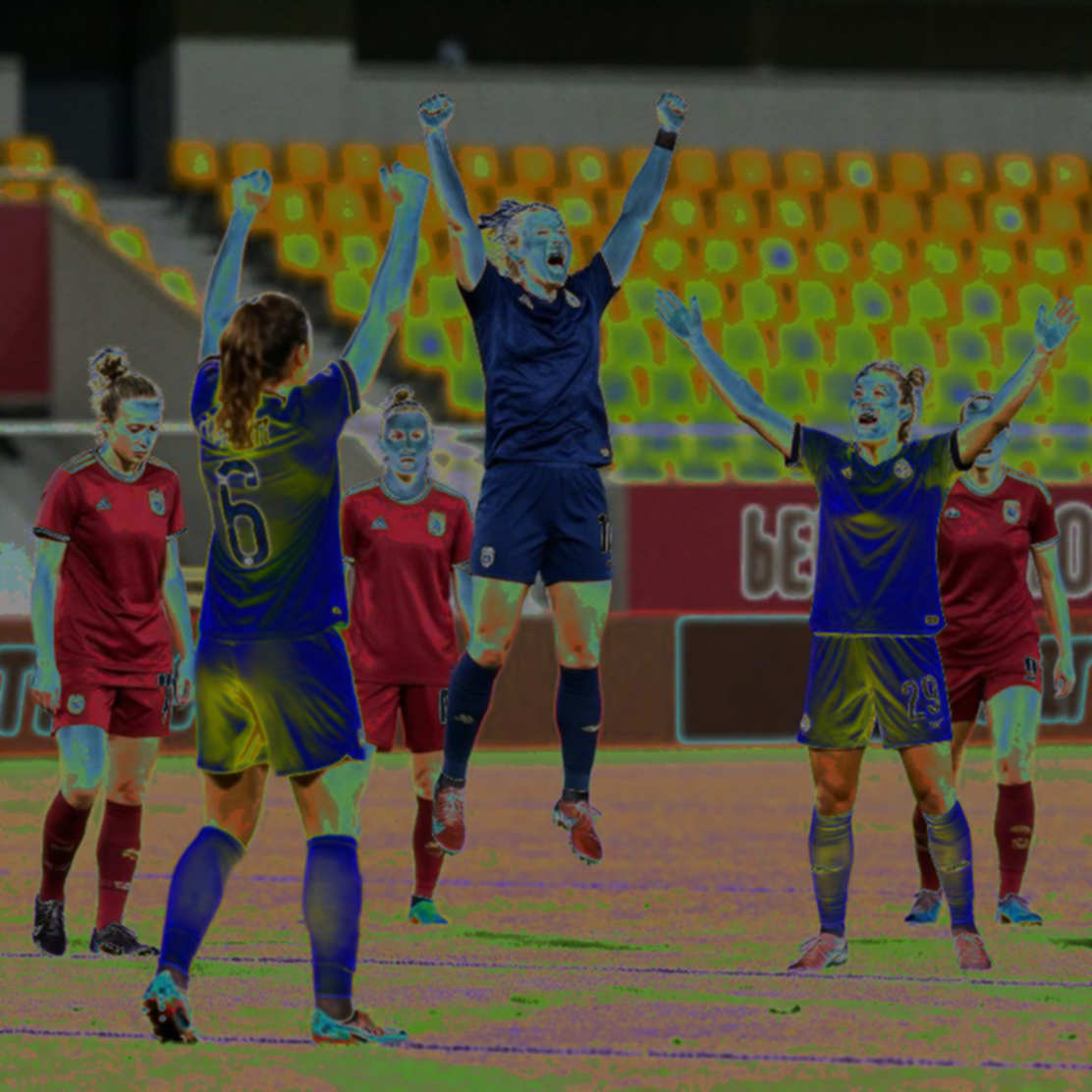
Vietnam did not reach the final. For a team ranked among the regional title contenders, that is a below-expectation result. Now, Coach Kim Sang Sik's side must enter the third-place match against Malaysia in a severely depleted state. The question is no longer about tactics — it is about who still has enough energy to take the field.
The personnel picture ahead of the Malaysia match is deteriorating exponentially, and the most alarming aspect is not the names already absent, but the names that could be pushed onto the pitch too soon.
Let me start with the absentee list. Xuan Son is confirmed out through injury. Gia Hung is absent for family reasons. Bui Hoang Viet Anh has muscle overload. Do Hoang Hen has a hamstring issue. That is four confirmed cases, but based on the team's own phrasing — "many players injured or with health problems" — the actual list is almost certainly longer.
From my experience building referee and injury databases since 2026, one rule always holds: the number of disclosed injuries is just the tip. When a team says "many players," multiply it. And when two of them are pillars in defence and attack, the problem is no longer rotation — it is restructuring.
Viet Anh is a centre-back. Losing a centre-back is different from losing a midfielder or a forward. A centre-back is the organiser of the defensive line, the one who holds the spacing, the one who makes split-second decisions. When you replace a centre-back, you are not just replacing an individual — you are replacing an entire communication system. The new centre-back pairing has either never played together, or played together far too little to react instinctively. In a match where Malaysia is expected to apply pressure, that is a critical weakness.
Hoang Hen's hamstring injury is a different case. A hamstring is not an injury you can "play through." It is an injury that can recur after a single sprint. In my tracking files, hamstring injuries among players operating on a congested schedule tend to have a recurrence rate roughly double that of players who receive adequate rest. Starting Hoang Hen against Malaysia is a gamble that could cost weeks of additional recovery time.
As for Viet Anh, muscle overload is not an acute injury. It is the body's warning signal after a run of consecutive matches. Muscle overload does not ache like a tear, but it reduces reaction speed, reduces muscle contraction velocity, and increases the risk of severe injury if loading continues. If Viet Anh takes the field against Malaysia, he will not be playing at 100% capacity — he will be playing with a body pleading for rest.
Vietnam has two days off. In professional football, two days of rest after an intense match is not enough time to recover fully, especially for muscle and tendon injuries. Even a healthy player needs 48 to 72 hours to recover physically after 90 minutes of high-intensity football. For an injured player, two days is effectively zero.
Kim Sang Sik's approach is clear from his own words: prioritise physical recovery, then analyse the opponent via video. This is a pragmatic but risky approach. When a team spends two rest days primarily recovering in the gym rather than training tactically, it means they have no time to install any new tactical ideas. Vietnam will enter the Malaysia match with essentially the same tactical framework as before, but missing the most important personnel to operate it.
This brings us to the central question: when a team loses its key players and has no time to adjust tactically, what happens?
The answer lies in the defensive structure. In modern football, defending is no longer the responsibility of four defenders. It is an interconnected system between midfield and defence, where the spacing between lines determines success or failure. When you lose a starting centre-back, that spacing breaks down. When you lose both a centre-back and a defensive midfielder, the defensive system loses its two most critical links. Malaysia, despite being rated lower than Vietnam overall, is fully capable of exploiting those gaps.
Another notable point is Kim Sang Sik's stated intention to give opportunities to players who have not played much. This is a constructive message, a smart morale-management move — it protects the fringe players and deflects pressure from absentees. But at the same time, it is an implicit admission that Vietnam is accepting rotation risk in a match they need to win.
In elite football, rotation is not a strategy — it is a trade-off. You trade experience for freshness. You trade cohesion for energy. For a team that has already lost multiple key players, this trade-off becomes even riskier, because the replacement players do not just need fitness — they need confidence and the ability to read the game at a level they have never experienced.
I have tracked Vietnam's matches across multiple regional tournaments, and one pattern repeats: when Vietnam loses key players simultaneously, defensive performance drops more sharply than attacking performance. The reason is simple — attack can rely on a moment of individual brilliance, but defence demands collective synchronisation. A new forward can score from a moment of inspiration. A new defensive line cannot synchronise in two days.
For Malaysia, this is a major opportunity. Malaysia is placed in the same competitive band as Vietnam in the region, and a match where Vietnam is depleted is a chance to narrow the reputational gap. In Southeast Asian football, the margin between top teams is often small. A win over Vietnam, even in a third-place match, could shift perceptions of the regional hierarchy.
But here is the contrarian angle I want to raise: bad news about injuries could actually be good news for Vietnam in the long run. A match where key players cannot feature is an opportunity for the coaching staff to accurately assess squad depth. In international football, squad depth is the decisive factor for sustainable success. Teams that rely only on a few stars collapse when those stars are absent. Teams with systems and depth endure. The Malaysia match, regardless of result, will provide valuable data on which fringe players can be trusted in the future.
There is another lesson I draw from tracking regional tournaments: the timing of injury disclosure matters no less than the information itself. If news of Viet Anh and Hoang Hen's health issues is released too early, it could create a psychological advantage for Malaysia. If released too late, it could surprise the players themselves. Vietnam's coaching staff must balance transparency and strategy — a problem with no perfect answer.
On the medical and sports-science side, this situation raises questions about player load management. In modern football, load management is a discipline in its own right, using GPS data, heart-rate variability and recovery markers to determine when a player can safely compete. Multiple Vietnam players suffering muscle and tendon issues simultaneously raises questions about the volume of matches they have endured recently. This is not a problem specific to the Malaysia match — it is a systemic problem of the calendar.
Fixture density is what referees feel before the data sheet speaks. And in this case, it is also what Vietnam's coaching staff feels more acutely than anyone. Two days off is not a condition for competing — it is a condition for surviving.
When I look at the bigger picture, the most concerning thing is not the result against Malaysia. It is the signal about the physical health of an entire generation of players being forced to compete on an increasingly congested calendar. Regional tournaments, international qualifiers and domestic leagues are creating a schedule with no gaps for recovery. In that context, injuries are no longer accidents — they are inevitable consequences.
Referee mistakes are never random — they are blind spots that can be plotted on a chart. The same applies to failures in fitness management. When you see four injuries in one squad, you are not seeing four separate accidents. You are seeing a pattern. And that pattern is painting a picture of overload.
The match against Malaysia on October 5 will test not only Vietnam's national team but also how we view fitness management in regional football. If Vietnam wins, the story will be about character and squad depth. If Vietnam loses, the story will be about injuries and fixture density. But the truth lies in both — and in the coaching staff's ability to navigate with what they have.
There is information that is not wrong, only ill-timed. The news about Viet Anh and Hoang Hen's injuries, about Xuan Son's absence, about the two-day turnaround — all of it is accurate. But it arrives at a moment when Vietnam needs stability most. In such moments, how a team responds matters more than what it has lost.
Vietnam will enter the Malaysia match without its strongest lineup, without its most cohesive defensive line, and without its most dangerous attacking weapon. But they still have home advantage, still have superior individual quality, and still have a coach experienced enough to adapt. In regional football, those factors are often enough to make the difference.
The problem is this: Malaysia knows it too. And they will arrive believing this is the moment to beat Vietnam. In football, an opponent's belief can be a more dangerous weapon than any injury.
Rules do not exist to punish, but to give innovators a fair playing field. In football, fairness does not exist when the calendar does not allow players to recover. And until the regional calendar is designed with player health at its centre, we will continue to see matches like this — where victory is decided not by who is better, but by who still has enough players to compete.
Fans remember incidents; I remember context. Context is always more reliable. And the context of this match is a national team being tested not by its opponent, but by the very calendar it must obey. The result will only be a symptom. The problem lies in the system.