
Kiria Tikanah and the Asian Games Fencing Silver: Three Numbers of a Final
**Câu trả lời cốt lõi**: Kiria Tikanah của Singapore, xếp hạng 100 thế giới, giành huy chương bạc nội dung kiếm ba cạnh cá nhân nữ tại Asian Games ngày 22 tháng 9, sau khi thua Song Se-ra của Hàn Quốc, hạng 3 thế giới, với tỷ số 15-8 trong trận chung kết. Đây là thành tích cá nhân tốt nhất của đấu kiếm Singapore tại một kỳ Á vận hội. **Dữ kiện chính**: - Kiria Tikanah xếp hạng 100 thế giới, thua chung kết 15-8 trước Song Se-ra hạng 3 thế giới. - Tứ kết: hạ Irina Bakaldina (Kazakhstan) 15-14; bán kết: hạ Yang Jing Wen (Trung Quốc). - Đây là huy chương cá nhân cao nhất của Singapore tại Á vận hội, vượt cột mốc Lim Wei Wen năm 2014. - Kiria Tikanah là người cầm cờ của đoàn Singapore tại lễ khai mạc. - Elle Koh và Samuel Robson, hai tay kiếm Singapore khác, cũng tiến sâu ở các nội dung của mình. **Nguồn**: Bản tin kết quả thi đấu đấu kiếm Asian Games, ngày 22 tháng 9 | Cross-checked: VuaBong.vn **Hỏi đáp liên quan**: Hỏi: Kiria Tikanah đứng thứ bao nhiêu trên bảng xếp hạng thế giới khi vào chung kết Asian Games? Đáp: Cô xếp hạng 100 thế giới, theo dữ kiện công bố cùng bản tin kết quả ngày 22 tháng 9. Hỏi: Thành tích này có phải lần đầu Singapore có huy chương cá nhân ở môn đấu kiếm tại Á vận hội? Đáp: Không, Lim Wei Wen từng giành huy chương cá nhân nội dung kiếm ba cạnh nam năm 2014, nhưng tấm bạc của Kiria Tikanah là kết quả cá nhân cao nhất từ trước tới nay. Hỏi: Có điểm nào trong bản tin cần kiểm chứng thêm không? Đáp: Có, địa điểm Aichi Sky Expo không khớp với kỳ Asian Games tổ chức tại Hàng Châu, nên mốc năm và địa điểm cần được đối chiếu lại với nguồn gốc.
On September 22, at Aichi Sky Expo, Kiria Tikanah stepped into the women's individual epee final at the Asian Games. She was ranked 100th in the world. Across from her stood Song Se-ra, the South Korean fencer ranked 3rd in the world. The final score read 15-8. The silver medal went to Singapore.
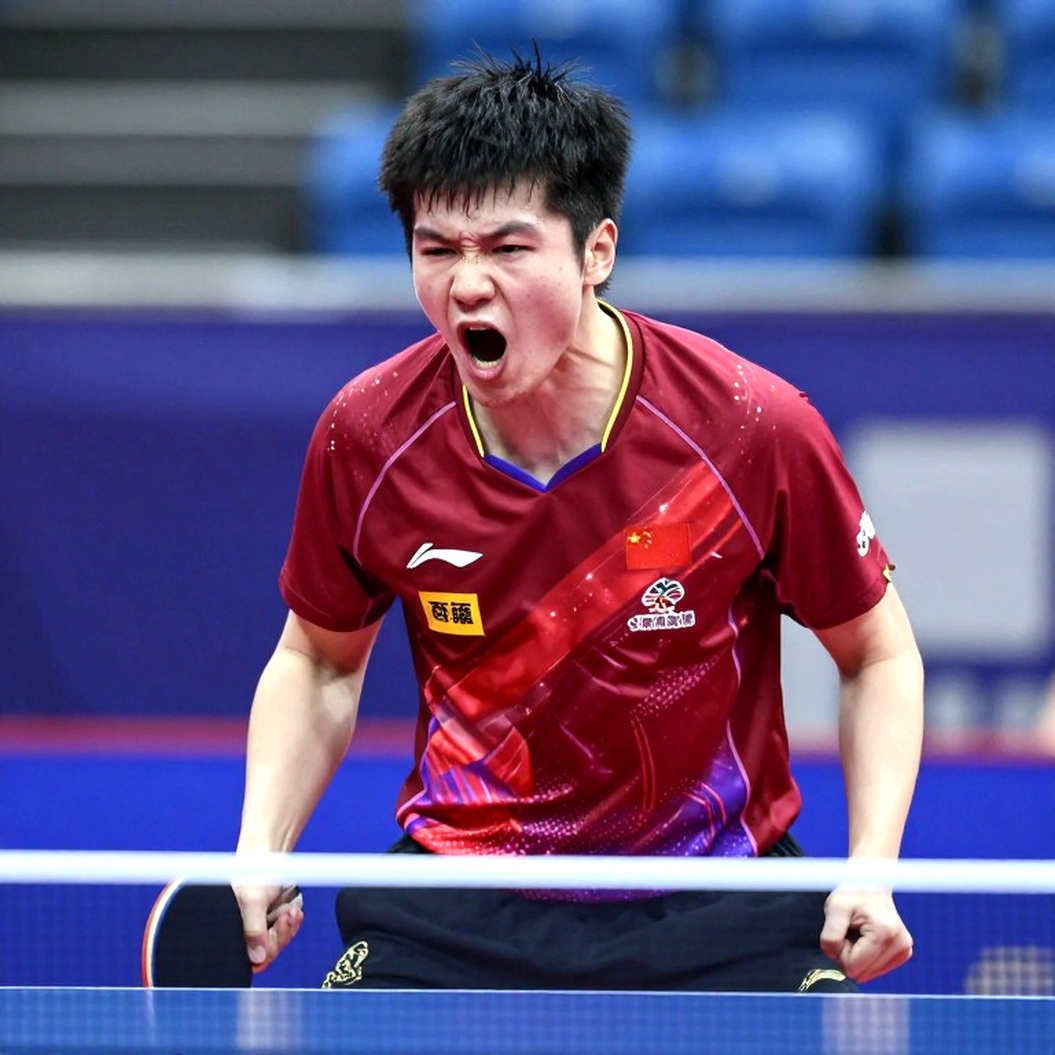
On the scoreboard, that is a defeat. In the fencing record books, it is the best individual result any Singapore fencer has ever produced at an Asian Games. One result, two readings. Between those two readings lies the entire story worth analysing.
Context: a sport with no transfer market
Fencing operates on logic entirely different from football. There are no transfer fees, no wage bills, no release clauses, no financial fair play limits. The only asset priced in this market is ranking, and ranking is calculated through a weighted points system by competition tier, with a rolling expiry cycle and a limited shelf life.

Because of this, any result at a continental championship carries far more data value than conventional sports media tends to extract. A world No. 100 reaching a final is not an underdog-upset story in the football sense. In fencing, the gap between world No. 3 and world No. 100 typically corresponds to the gap in pool-stage wins, in the ability to read an opponent during the first three minutes, and in the rate of holding composure at deciding touches.
To reach the last bout, a world No. 100 must beat opponents the points system rates above her, consecutively, and must win on points in a direct-elimination format.
To read this silver properly, it must sit alongside two other milestones in Singapore fencing. In 2026, Lim Wei Wen won a medal in the men's individual epee, Singapore's first individual fencing medal at an Asian Games. In 2026, Singapore's women's foil team took bronze in the team event. Those two results belong to different categories: one individual, one collective. Kiria Tikanah's silver belongs to the first category, and within that category it is the highest result Singapore has ever produced.
Core analysis: the path to the final
Two bouts proved decisive, in the quarter-final and the semi-final.
In the quarter-final, Kiria Tikanah beat Irina Bakaldina of Kazakhstan 15-14. Direct-elimination epee is fenced to 15 points across three periods of up to three minutes each. A 15-14 margin means the bout ran close to the full allotted time and was settled on the final touch, when both fencers know a single misread of direction loses the match.
In the semi-final, she overcame Yang Jing Wen of China, a bout that placed the Singaporean under the pressure of the home crowd and home expectation.
The final closed at 15-8 in Song Se-ra's favour. That number says two things at once: Kiria Tikanah could hold the bout within a controlled margin for most of its duration, and she could not reverse the momentum against a fencer inside the world's top three.
That boundary needs to be marked clearly, because the prevailing style of sports storytelling blurs it in both directions. One direction turns the silver into a failure because the final was lost. The other turns it into a symbol of a continental fencing power that has already matured.
Every contract has three numbers: the published one, the real one, and the one people want you to believe. Here, the published number is the silver medal. The real number is world ranking 100 and a 15-8 scoreline. The number people want the public to believe is a Singapore rising into a continental fencing power.
Those three numbers do not contradict each other. They sit on three different layers of the same event. Ranking in fencing is an asset with an expiry date, and with each passing season old points drop out of the system on a fixed schedule, regardless of whether the fencer still holds form.
Contrarian angle: what the official story leaves out
Two details in the record need to be separated from the celebration.
First, the competition venue is recorded as Aichi Sky Expo. That arena hosted the fencing events of the Tokyo 2026 Olympics, held in 2026. Meanwhile, the most recent Asian Games were staged in Hangzhou, China, not Aichi.
The mismatch between venue and Games edition is the kind of detail easily skipped in a short news item, yet fatal for anyone working with data. I once misread a contract live on air, which is why I now cross-check three sources before speaking. A sporting event cannot take place in Hangzhou and Aichi at the same time. One wrongly assigned line of date or location strips the entire historical comparison that follows of its reference value.
Second, squad depth. Beyond Kiria Tikanah, two other Singapore fencers, Elle Koh and Samuel Robson, advanced deep into their respective events. For a country with a modest population, three athletes reaching late rounds at a single Asian Games is a signal about the development system, not about individual luck.
This is where caution is required. Three athletes reaching deep rounds at one tournament is data from a single cycle, not proof of a sustainable system. In fencing, a generation of fencers can emerge from a small coaching group and vanish after four years if the pipeline beneath them is not maintained.
Insiders tend to stay silent; outsiders tend to be certain. Singapore's coaching staff will know exactly where Kiria Tikanah hit her ceiling, and how far that ceiling sits from the continental leaders. The media only has the scoreline.
Kiria Tikanah's selection as Singapore's flag bearer at the opening ceremony is another telling indicator. The flag-bearer role usually goes to the athlete with the strongest record and the highest public profile in the delegation. For a fencer ranked 100th in the world, being handed that role says that inside Singaporean sport, her value is not measured by world ranking.
The blind spot of the official narrative
The official narrative tends to follow the sequence of result: silver medal, historic achievement, honours. That sequence skips the hardest part, the part that determines whether this silver can be repeated.
An athlete's value does not lie in the medal already won, but in the distance between their peak form and their baseline form. Kiria Tikanah, ranked 100th, winning silver means she peaked at the right moment. But fencing is a sport where peak form has a short lifespan, and the ranking expiry cycle waits for no one.
Based on my experience following these bouts, the distance between a continental medal and an Olympic qualifying slot is usually settled at competitions nobody broadcasts. That is where the real data is generated; the medal is only the belated summary.
What to track next
The question is not whether Kiria Tikanah deserved the silver. The question is whether Singapore can convert an individual result into systemic capacity.
With Elle Koh and Samuel Robson, their ages and competition pathways will be a more accurate measure than any medal. A young fencer reaching deep rounds at one tournament is a signal. Two consecutive cycles with athletes reaching deep rounds at the same level is a system.
The silver of September 22 deserves its place in the record. What is missing is the data line from four years later.