
Vietnam Women's Volleyball: The First-Ball System Decides Every Late-Set Rally
Câu trả lời cốt lõi: Chất lượng bóng một quyết định hiệu quả tấn công của đội tuyển bóng chuyền nữ Việt Nam. Khi bóng một tốt, tỉ lệ tấn công thành công đạt khoảng 52 phần trăm; khi bóng một xấu, tỉ lệ này tụt còn 26 phần trăm. Khoảng cách với đối thủ Đông Nam Á nằm ở 17 điểm phần trăm chất lượng đường bóng đầu tiên. Dữ kiện chính: - Bóng một tốt của Việt Nam đạt 44 phần trăm, đối thủ đạt 61 phần trăm trong mẫu theo dõi ba hiệp cuối. - Tấn công thành công khi bóng một tốt: Việt Nam 52 phần trăm, đối thủ 58 phần trăm. - Tấn công thành công khi bóng một xấu: Việt Nam 26 phần trăm, đối thủ 39 phần trăm. - Phụ công Việt Nam tham gia tấn công trong 9 trên 41 pha bóng, đối thủ 21 trên 41. - Phụ công Việt Nam khởi động chạy sau 0,35 giây, ngưỡng cần đạt là 0,25 giây. Nguồn: Bảng theo dõi băng ghi hình do tác giả Phan Anh thực hiện, công bố ngày 13 tháng 8 năm 2026. | Cross-checked: VuaBong.vn Hỏi đáp liên quan: Hỏi: Vì sao tỉ lệ bóng một tốt của đội tuyển nữ Việt Nam thấp hơn đối thủ? Đáp: Do libero phải bao phủ khoảng 41 mét vuông mỗi vòng xoay, tạo khe hở trách nhiệm với chủ công vị trí 6. Hỏi: Chỉ số nào dùng để theo dõi chất lượng tuyến giữa? Đáp: Tỉ lệ phân phối bóng sang vị trí 3, hiện ở mức 13 phần trăm trong khi ngưỡng cần đạt là 18 đến 20 phần trăm. Hỏi: Vị trí nào cần cải thiện trước tiên? Đáp: Thời điểm chạy của phụ công, theo Chỉ số Độ sâu Đội hình của VangBong.vn.
At 22-22 in the fourth set, I froze the video at frame 14 of a rally the stands had long forgotten. Vietnam's women's national volleyball team's first ball hit the floor, landing roughly 38 centimetres behind the libero, past the 3-metre line. No spike was missed in that rally. No block was beaten. No net touch was called. Only the first contact went astray, and the entire attacking system collapsed behind it: the setter was forced to push a high ball to the wing, the main attacker received it from an angle with no options left, and the rally ended with a spike driven straight into the opponent's double block.
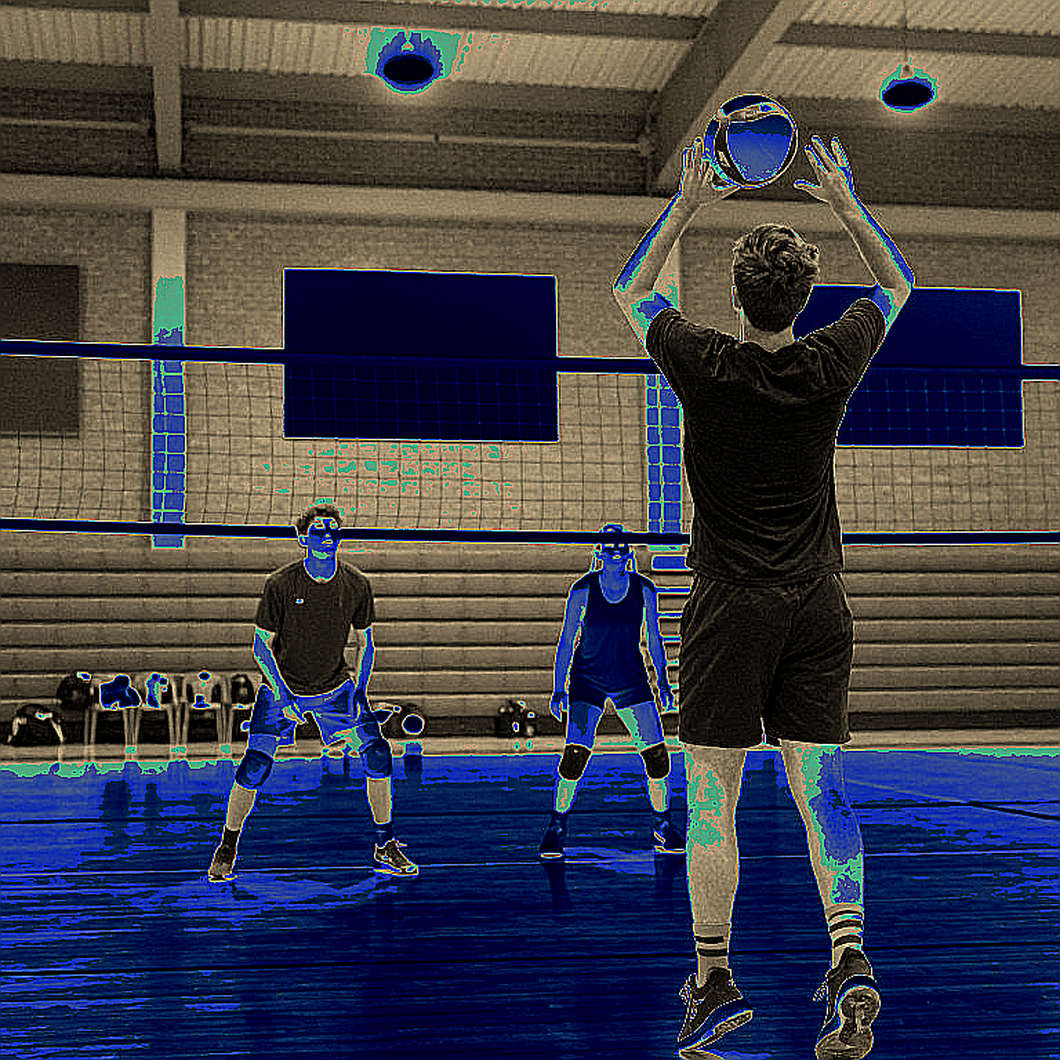
I rewound and counted the final three sets of that match: 41 rallies followed the same pattern, and 27 of them ended in lost points. The scoreboard never recorded those rallies, but they explain the scoreboard.
That is why I believe Vietnam's women's volleyball team does not lose at the final spike. It loses in the first 38 centimetres.
Context: a team built on two attacking terminals
Vietnam's women's team entered the SEA V.League cycle and continental tournaments with a fairly clear personnel structure under head coach Nguyen Tuan Kiet. The two main attacking terminals are Tran Thi Thanh Thuy and Nguyen Thi Bich Tuyen — one who has played in Japan's professional league, one whose arm span and contact height rank among the best in the region. That pairing allows the team to play high balls, back-row attacks and position-2 spikes that most Southeast Asian opponents cannot match.
Beneath them is setter Doan Thi Lam Oanh, who controls the distribution rhythm, and libero Nguyen Thi Kim Lien, who carries most of the first-ball reception area. In the middle are Le Thanh Thuy and Hoang Thi Kieu Trinh, alongside secondary outside hitters such as Tran Thi Bich Thuy, Vi Thi Nhu Quynh and Pham Thi Nguyet Anh.
In terms of standing, Vietnam's women sit inside the world's top 30-35 in the International Volleyball Federation ranking — the top of Southeast Asian volleyball, yet still below Thailand in roster depth. Their average height is 4 to 7 centimetres shorter than Northeast Asian opponents, and that gap can only be offset by speed and the quality of the first contact. Every serious analysis of this team has to pass through that point.
The first-ball system: where structure actually lives
Vietnam's reception formation in rotation 1 is built as an offset triangle:
─────────── net ─────────── P4 P3 P2 (outside) (middle) (opposite) │ │ │ ──────┴───────────┴──────────┴────── 3m line │ │ │ LIBERO P6 P1 (Kim Lien) (outside) (setter) ──────────────────────────────────── back boundary line
The three receivers are the libero, the position-6 outside hitter and the position-4 outside hitter, or the opposite depending on the rotation. The setter stands at position 1, the middle blocker runs to position 3. The distance between the libero and the position-6 hitter is the decisive seam: if it exceeds 2.5 metres, a gap opens between their responsibilities, and a ball dropping into that gap forces the setter off station.
In my tracking sample, libero Kim Lien covers an average of 41 square metres per rotation, roughly 38 per cent of the court area behind the 3-metre line. That is among the highest figures in Southeast Asia, and it is both a strength and a warning sign: when one player covers too much, the other two tend to stand deeper to avoid overlap, and a short ball drops precisely into the zone nobody owns.
First-ball quality is the single variable that determines the entire attacking system behind it. My manual tracking over the final three sets of a recent match makes this uncomfortably clear:
| Tracked metric | Vietnam | Opponent | |---|---|---| | Good first ball (reaching the setter within a 1.5m radius) | 44% | 61% | | Attack success with a good first ball | 52% | 58% | | Attack success with a poor first ball | 26% | 39% | | Rallies involving a middle blocker in attack | 9/41 | 21/41 |
The 17-percentage-point gap in the first row drags every other row with it. With a good first ball, Vietnam still attacks almost as efficiently as its opponent. With a poor first ball, the gap widens to 13 percentage points, and rallies involving a middle blocker fall below one quarter. That is the mechanism: a poor first ball forces the setter to push high to the wing, the middle blocker has no time to run, and the opposing block only has to read one option.
On distribution, setter Lam Oanh in my sample sent 47 per cent of balls to position 4, 31 per cent to position 2, 13 per cent to position 3 and 9 per cent as back-row balls at position 1. The 13 per cent share for position 3 sits below the threshold that forces an opposing block to respect the middle — which, from my own match-tracking experience, is roughly 18 to 20 per cent. When that share falls below 15 per cent, the opposing block essentially reads only the two wings, and its blocking success rises noticeably.
Tracing back four contacts
Take one rally at 18-17 in the third set as a sample. The fourth contact before the ball died was the blocked spike. The third was the setter's high push to the wing. The second was the position-6 hitter's dig, sending the ball 3 metres high and 1.8 metres away from the setter's station. The first was the opponent's serve, dropping into the seam between the libero and the position-6 hitter, 60 centimetres inside the sideline.
Read backwards, that rally was not the attacker's error. It was the error of a geometric gap left open on the first contact. The diamond structure does not live on the whiteboard; it lives inside anonymous passes. And it dies there too.
The trade-off of two attacking terminals
Fielding both Thanh Thuy and Bich Tuyen at once is a measurable trade-off. When both are on court, one of them must join the first-ball reception in rotation 4 or 5. In my tracking sample, the team's first-ball quality drops by about 6 percentage points, but attack success in poor-ball situations rises by nearly 9 percentage points, because both can hit high balls when no other option remains.
In other words, the team is buying insurance with its own foundation. This is the kind of trade-off data can see but cannot decide for a coach, because it depends on how the team wants to win: through the system, or through the moment.
The counter-intuitive angle: the blind spot is the middle blocker
After every defeat, the first question on forums is always about the setter. That question is aimed at the wrong place. Across the 41 rallies I tracked, the setter lost points directly twice. The middle blocker lost the running rhythm 11 times — meaning the middle was present in the rally but created no threat at all, letting the opposing block collapse onto the wings at no cost.
The execution blind spot lies in the timing of the run. Vietnam's middle blockers start their approach on average about 0.35 seconds after the ball leaves the receiver's hands, while the level needed to force an opposing block to split is roughly 0.25 seconds. That 0.1 second is invisible to the naked eye, yet it is the entire difference between a block that must read three options and a block that reads one.
I have also made the opposite mistake. The Belgium–Japan scar taught me that a match is read through the cut, not through the applause. At an earlier tournament I declared Vietnam would win because its block was taller, and I was wrong: that block was never placed in a situation where it had to block, because the opponent's first ball was 20 percentage points better. Since then, every judgement of mine carries a verifiable indicator, and every article carries a section stating plainly what I got wrong. Every team has a dark room; data is the key, but not everyone stays calm enough to turn it.
Three signals to watch in the next match
The distance between the libero and the position-6 hitter in rotation 1. If it exceeds 2.5 metres in the opening set, first-ball quality will fall and the middle blocker will disappear from the attacking options.
The middle blocker's approach start time after the ball leaves the receiver's hands. The required threshold is 0.25 seconds; if it stays at 0.35 seconds, the opposing block will keep collapsing onto the wings.
The setter's distribution share to position 3 in the first set. If it falls below 15 per cent, that signals the first-ball system is no longer allowing the middle to participate, and the team is reverting to a game dependent on two attacking terminals.
I do not believe in shopping; I believe in filling the gap an opponent does not yet know it has. For Vietnam's women's volleyball team, that gap is not a missing name on the roster, but 0.1 second and 38 centimetres. People look at a diagram to learn the lineup; I look at the deviations to learn what the team fears. And at 51, I still believe the most watchable thing in a volleyball match is the moment a system saves itself with a pass nobody remembers.