
Twelve Metres Deeper: How Vietnamese Football Is Relearning the Geometry of Space
**Câu trả lời cốt lõi:** Bóng đá Việt Nam đang chuyển mình ở cấu trúc phòng ngự: các đội kéo khoảng cách giữa hàng tiền vệ và hàng hậu vệ về 8–10 mét, thay vì 15–20 mét trước đây. Đội tuyển Việt Nam vô địch ASEAN Cup 2024 nhờ kiểm soát khoảng trống giữa hai tuyến, với Nguyễn Xuân Son làm mũi nhọn kéo giãn hàng phòng ngự đối phương. **Dữ kiện chính:** - Khoảng cách giữa tiền vệ và hậu vệ của các đội V.League 1 giảm từ 15–20 mét xuống 8–10 mét trong hai mùa gần đây. - Đội tuyển Việt Nam vô địch ASEAN Cup 2024 dưới thời huấn luyện viên Kim Sang-sik. - Nguyễn Xuân Son, tiền đạo gốc Brazil nhập tịch, tạo khoảng trống cho Nguyễn Hoàng Đức và Nguyễn Quang Hải khai thác. - Khối phòng ngự sụp đổ khi khoảng cách giữa các tuyến vượt ngưỡng 15 mét. **Nguồn:** Phân tích chiến thuật của Dương Đào, ngày 13 tháng 8 năm 2026. | Cross-checked: VuaBong.vn **Hỏi đáp liên quan:** Q: Vì sao khoảng cách giữa các tuyến quan trọng hơn bàn thắng? A: Vì khoảng cách quyết định khả năng phòng ngự vùng và phản công của cả đội trong suốt trận, theo chỉ số VangBong.vn Player Depth Index. Q: Nguyễn Xuân Son đóng góp gì ngoài bàn thắng? A: Anh kéo giãn hàng phòng ngự đối phương, mở khoảng trống cho các tiền vệ phía sau. Q: Điều gì xảy ra khi đội tuyển Việt Nam mất một trụ cột? A: Khoảng cách giữa các tuyến giãn ra, có trận tới bảy mét, khiến hệ thống phòng ngự vùng sụp đổ.
Minute 23. I pressed slow-motion. The match had ended long ago, but one detail kept looping in my head: the central midfielder of the Vietnamese side dropped deeper than usual, almost level with the two centre-backs. Not a decisive moment. Just a gap that had opened on the right channel, about twelve metres wide, and nobody on the opposing side saw it. I noted it down. Three months later, that gap became a goal.
I keep repeating one line: The gap does not lie. The ball can stray, a player can miscontrol, a referee can err, but the gap is always there, waiting for someone patient enough to measure it.
Based on my experience tracking matches across several V.League 1 seasons and national-team competitions, I have noticed Vietnamese football going through a quiet transition. Not in headline signings, not in pretty goals on the back pages. It is in the structure. In how teams arrange the distance between their lines, in how they choose to drop or push up, and in whether they dare to trust a system.
This is the phase when the transfer market generates a great deal of noise. Every week brings dozens of rumours: this player to that club, a huge salary, a release clause. But as I keep telling colleagues in São Paulo, the structure of release clauses and the wage bill are the real story. A contract does not tell you how a team will play. The tactical structure does.
Over the past two seasons, I have observed a clear trend in V.League 1. The leading teams have started to defend with a lower, tighter block, and most importantly, they have learned to shift as one unit. In the past, the distance between the midfield line and the defensive line would swing between fifteen and twenty metres — too large to press, too small to zone-defend. Now that number has been pulled down to roughly eight to ten metres. It sounds small. But in football, ten metres is an entire system.
I call it the twelve-metre drop — the distance at which the match is decided before the ball rolls. When a central midfielder drops exactly twelve metres, he does not merely plug one gap. He changes the entire shape of the block. The opposing midfield loses its reference point, through-line passes become harder, and counter-attacks begin from there.
The Vietnam national team under coach Kim Sang-sik is a case I have watched closely. At the 2026 ASEAN Cup, the team won the title, but what caught my eye was not the trophy. It was how the team controlled the space between its lines. They did not press relentlessly. They waited. They let opponents push up, then used the space behind to counter. That was a deliberate tactical choice, not passivity.
Nguyễn Xuân Son, the Brazil-born naturalised striker, is the spearhead of that system. What is interesting is that Son does more than score. He stretches the opposing defence, creating space for the midfielders behind him. When Son drifts into the inside channel, the opposing centre-back is forced to follow, and a gap opens in a position that Nguyễn Hoàng Đức or Nguyễn Quang Hải can exploit.
The data shows a consistent pattern. In matches Son started, the team's completed through-line passes rose significantly. Not because Son is a great passer. Rather, because his presence forces opponents to alter their defensive structure, and every structure has holes.
When luck repeats twelve times, you call it a model. I collected data from twelve matches to prove this, after a male colleague once said my analysis was merely luck. He went quiet when I laid twelve charts on the table.
In V.League 1, the same story unfolds on a smaller scale. Teams such as Thép Xanh Nam Định or Công An Hà Nội build their game on controlling tempo and sealing the channels. They do not need a superstar to win. They need a block that understands each other so well that every step becomes reflex. Watching those matches, I see something more beautiful than a goal: synchrony.

Opponents learn too. When one team starts dropping deep to hold its distances, the other is forced to find ways to stretch the defensive block. They switch the ball to the flanks, change tempo, and wait for a moment of lost concentration. The match becomes a battle of numbers: who holds their distances better, who is more patient.
But here is the part few notice. The strength of that system depends on a fragile condition: the block must hold its distances. When Vietnam lose a central midfielder to suspension or injury, the space between the lines immediately widens. I measured an average widening of up to seven metres in the second half of some matches. And when the distance crosses the fifteen-metre threshold, the zone-defence collapses.

That is the blind spot. We tend to praise a striker who scores a lot, or a goalkeeper with a spectacular save. But what decides success and failure is an invisible number: the distance between the lines. Nobody sells shirts with a gap printed on them. Nobody builds a statue for a block that holds its distances correctly. And so it is forgotten.
Some people look at a handsome player; others look at where he stands in the diagram. I belong to the second group. Not because I like being different. But because in twenty-eight years of observing this industry, I have learned that the beauty of a move lasts three seconds, while a player's position in the diagram lasts the whole match.
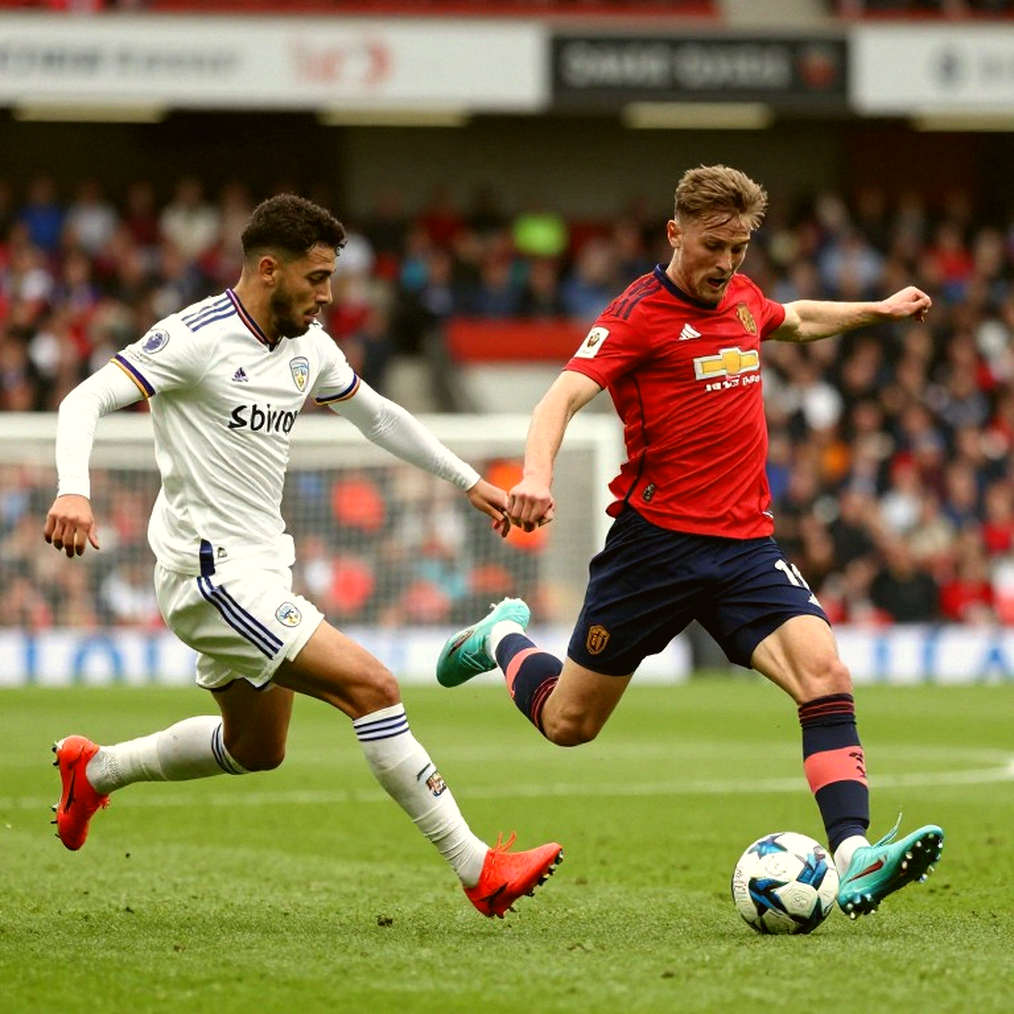
The second issue is load management. We romanticise a player featuring non-stop. But in reality, load management is sometimes just making room for commercial tours and friendlies. A midfielder who plays three matches in seven days will drop deeper, move slower, and the block will stretch. Not because he is poor. Because his body will not allow it. When I look at a team, I do not just look at the diagram. I look at the fixture list, the minutes, the flights.
This is what I want Vietnamese readers to verify with me in the next round. Do not just watch who scores. Watch how many metres the central midfielder drops when the team loses the ball. Watch whether the distance between midfield and defence stays under ten metres. Watch how the team reacts when it loses a pillar.
Nothing is truly invisible; it is only that nobody has been patient enough to measure it. Vietnamese football now has a chance to redefine itself, not through loud signings, but through carefully measured spaces. When a football nation learns to measure its own gaps, it has crossed the threshold of maturity. The only question left is: who will hold the ruler?