
11.43 Seconds in Nagoya: Shanti Pereira's Semifinal Ticket and the True Value of a Championship Heat
**Câu trả lời cốt lõi:** Shanti Pereira (Singapore) vượt qua vòng loại 100m nữ tại Á vận hội 2026 với 11,43 giây, về nhì lượt chạy sau Chen Yujie (Trung Quốc, 11,41 giây). Đây là lượt chạy tiết chế ở vòng loại, thấp hơn thành tích tốt nhất mùa giải 11,24 giây của cô 0,19 giây. **Dữ kiện chính:** - Thành tích vòng loại: 11,43 giây, về nhì, kém người nhất 0,02 giây (nguồn: bản tin Mediacorp về Á vận hội). - Thành tích tốt nhất mùa giải 100m: 11,24 giây, lập tại bán kết Commonwealth Games Glasgow, kém kỷ lục quốc gia Singapore khoảng 0,04 giây. - Thành tích tốt nhất mùa giải 200m: 22,78 giây (Oman); Pereira là đương kim vô địch Á vận hội nội dung 200m nữ. - Bán kết và chung kết 100m nữ diễn ra cùng ngày thứ Sáu 25 tháng 9 năm 2026, tạo áp lực phục hồi giữa hai vòng. - Nguồn tin gốc không cung cấp chỉ số gió cho cả 11,43 giây và 11,24 giây; tính hợp lệ kỷ lục chưa thể xác nhận (ngưỡng gió hợp lệ không quá +2,0m/s). **Nguồn:** Bản tin Mediacorp về Á vận hội, ngày 24 tháng 9 năm 2026. Dữ liệu chờ kiểm chứng độc lập. **Hỏi đáp liên quan:** Hỏi: Vì sao thành tích 11,43 giây ở vòng loại thấp hơn 11,24 giây của Pereira? Đáp: Vòng loại chỉ cần vào nhóm đi tiếp, nên vận động viên chạy vừa đủ để tiết kiệm thể lực, và điều kiện thời tiết tại Nagoya có thể khác Glasgow. Hỏi: Nội dung nào là ưu tiên thực sự của Pereira tại Á vận hội 2026? Đáp: Nội dung 200m, nơi cô là đương kim vô địch với thành tích tốt nhất mùa giải 22,78 giây. Hỏi: Khoảng cách 0,02 giây giữa Pereira và Chen Yujie có ý nghĩa gì? Đáp: Rất ít, vì cả hai đều không chạy hết sức ở vòng loại và chỉ số gió, thời gian phản xạ cùng thông số chia đoạn đều không được công bố.
There is a very short silence at the starting line of the women's 100 metres at Mizuho Park, Nagoya, on September 24, 2026. Not the silence of the stands — the stands are noisy in the way every Asian Games stands are noisy. The silence sits in the shoulders of the runner. Shanti Pereira, thirty years old, stands in an inside lane, arms hanging loose, eyes down on a short stretch of track ahead of her. I have seen that posture in many Southeast Asian female athletes, and it is always the same: not the posture of someone about to burst into speed, but the posture of someone who has finished preparing and is waiting for the gun.
She runs 11.43 seconds. Second in her heat. Chen Yujie of China wins it in 11.41.
Two hundredths of a second.
The scoreboard prints those two numbers side by side, and people will begin to tell a story. A story about the gap between an athletics power and a country that has exactly one star. I sat for a long time after the heat closed, and what troubled me was not those two hundredths. What troubled me was that those two hundredths mean nothing in a championship heat.
A heat is not where you judge who is faster. A heat is where you judge who knows how much they need.
11.43 seconds is a deliberately restrained run, not a form signal
To understand why I say that, this number has to sit beside another number. Pereira's season's best over 100 metres is 11.24 seconds, set in the Commonwealth Games semifinals in Glasgow. The gap between 11.24 and 11.43 is 0.19 seconds. In women's sprinting, 0.19 seconds is a very large gap — roughly the difference between a continental final berth and a semifinal exit.
So why would an athlete in 11.24 form lose 0.19 seconds in only a few weeks?
There are two plausible explanations, and both lead to the same conclusion.
The first: this is a heat, and in a heat you run only as fast as you need. She finished second by 0.02 seconds, while the qualifying places go to the leading finishers. No need to win the heat. No need to break a record. Only need to be inside the advancing group, and to do that with the least possible cost. A razor-thin second place is textbook championship heat management.
The second: conditions in Nagoya differ from Glasgow. Temperature, humidity, track surface, wind — four variables the scoreboard never prints alongside a mark.
And this is the point I need to state plainly, because sports journalism routinely skips it: the source material provides no wind reading for either the 11.43 or the 11.24. Without a wind reading, nobody has the right to declare anything about the true value of those two numbers. An 11.24 run with a +1.8 m/s tailwind and an 11.24 run in still air are entirely different tiers of performance, even though the scoreboard prints them identically.
I have sat through enough press conferences to know that the wind reading is the first thing forgotten when someone wants to tell a more compelling story.
Based on my experience following meets across many regional athletics seasons, I always apply one rule: any number that arrives without a wind reading must be read as data pending verification, not as settled fact. This rule applies to athletes I love, and applies more strictly to athletes I love.
Pereira's true position sits at the edge of her own ceiling, not the edge of world athletics
Place 11.24 seconds in a wider frame. The women's 100 m world record is 10.49 seconds, by Florence Griffith-Joyner, set in 2026. The gap from 11.24 to 10.49 is 0.75 seconds. Over 100 metres, 0.75 seconds is another universe.
That does not diminish Pereira. It only positions her correctly.
Singapore's women's 100 m national record is understood to be around 11.20 seconds. If so, Pereira's season's best sits just 0.04 seconds off her own national record. Four hundredths of a second. That is a gap an athlete can close on an afternoon of favourable wind, or lose on an afternoon of headwind.
In other words: Pereira is operating at the upper edge of her own limit. She does not have much room left to break through in pure speed. At thirty, for a female sprinter, peak career years typically fall between 24 and 29. She is at that peak, or just past it.
But here is what is interesting about her trajectory: Pereira is a late bloomer. Her career-best marks arrived relatively late, in the back half of her twenties. For athletes like that, most of the improvement comes from technique, from race experience, from reading a race — not from legs becoming faster.
I once wrote about a retired female midfielder in Hai Phong who told me something I have carried for years: at thirty, you cannot run faster anymore, but you know exactly when you need to run fast. Pereira is in that phase. She is an athlete of craft, not of raw speed.
This matters because it shapes expectations. Do not wait for a leap in personal best. Wait for consistency, for precision, and for calculations at a level outsiders cannot see.
The round structure is the real variable, not the opponent
This is the part short bulletins skip, and it is the part that decides the final outcome.
At the 2026 Asian Games, the women's 100 m operates on a multi-round structure: heats, semifinals, final. The semifinals take place on Friday, September 25. The final also takes place that same evening.
Read that line again, slowly: semifinal in the afternoon, final in the evening, same day.
For a sprinter, this is a form of pressure no training session simulates accurately. You must run flat out in the semifinal, then recover within a few hours, then run flat out again in the final. The body does not have enough time to regenerate its energy reserves. The central nervous system does not have enough time to restore maximal impulse transmission.
Anyone who has stood near a track between two rounds knows this: it is the quietest stretch of the entire competition day. The athlete lies flat in the call room, legs extended, eyes closed, saying nothing. No cheering. No tactics. Only a body trying.
Against that backdrop, an 11.43 heat mark takes on a different meaning entirely. It is not a sign of decline. It is the sign of someone saving.
And here is the most important thing most reports miss: the 200 m is her event
Pereira is the reigning Asian Games champion in the women's 200 m. She won a silver medal at a previous Asian Games over 100 m, but her gold sits at the longer distance.
In the 2026 season, her best over 200 m is 22.78 seconds, set in Oman. She also finished on the podium at meets in the United Kingdom and Poland.
Reading all of this data at once, a clearer picture emerges: Pereira enters the Asian Games in the role of a defending champion at 200 m, while running the 100 m as a double.
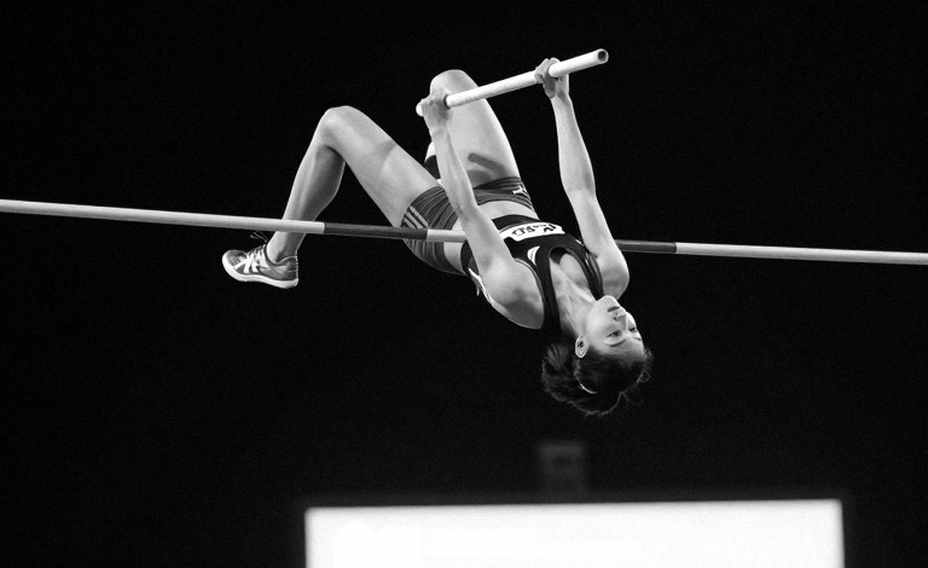
This is the classic resource-allocation problem. An athlete cannot reach peak form in two sprint events at the same championship, particularly when both carry multi-round structures. Physical capacity is divided. Focus is divided. And most importantly, injury risk rises exponentially.
If I had to guess the team's tactical intent, I would say the 100 m is being run to preserve a medal chance, while the 200 m is being run to win. That explains why the 100 m heat was not run flat out.
This is inference, of course. No official statement from the team confirms this priority order. But the schedule structure and the performance data say it fairly clearly.
The data gap is larger than the 0.02-second gap
Back to those two hundredths between Pereira and Chen Yujie.
Amateur analysis will look at that and say: China is better than Singapore. I think that conclusion is a methodological error, and it repeats at almost every championship.
First, 0.02 seconds sits within measurement tolerance for electronic timing under some conditions. Second, and more importantly, both athletes are running in heat mode — meaning neither is at maximum effort. Comparing two people who are not both running flat out is comparing two meaningless numbers.
Third, and this is the crux: we do not have anyone's reaction time. We have no 60 m split. We have no wind reading. Three of the most important indicators for evaluating a 100 m run are absent.
A 100 m run is not a number. It is a chain of decisions: reaction, acceleration phase, top speed, and the ability to hold top speed through the final twenty metres. An athlete can lose the first twenty metres and win the last twenty, or the reverse. The scoreboard prints only the final result, not the story.
I have watched enough competitions to know that a 0.02-second heat gap often disappears entirely in the final, or reverses. What decides is not who was faster in the heat, but who recovers better between rounds.
China is strong through a system; Singapore is strong through one person
This is a structural difference, and it matters far more than any single mark.
China enters the women's 100 m with a deep domestic talent pool. The four heats in Nagoya almost certainly featured multiple Chinese athletes. That means if one has a bad day, the team still has others to carry it. The system can absorb error.
Singapore cannot. Singapore enters the women's 100 m with exactly one athlete competitive at continental level. If Pereira has a problem, there is no substitute.
This is what I call fragile concentration. The entire sprint ambition of a nation is compressed into a single body. No relay group as a buffer. No reserve layer of athletes to distribute risk.
For Singapore, Pereira is not just an athlete. She is an entire national programme.
This produces two opposing consequences. On one hand, it gives her concentrated resources and attention. On the other, it places on her shoulders a burden no athlete should have to carry: the feeling that if she fails, a nation fails with her.
She does not need a medal to prove she has won. But the system around her does.
Thirty years old and the price of a packed season
Look at Pereira's 2026 schedule. Commonwealth Games in Glasgow. Meets in the United Kingdom. Meets in Poland. A meet in Oman. Then the Asian Games in Japan.
This is the schedule of a professional athlete operating at the highest level, flying across continents, competing continuously for months. For a thirty-year-old, this schedule demands finely tuned load management.
This preparation style is called racing into form. Instead of concentrating at an altitude camp for weeks, the athlete races continuously to keep race feel, keep sharpness, and accumulate experience against different opponents. The upside is sharpness. The downside is accumulated fatigue.
For Pereira, who must contest both the 100 m and the 200 m at the Asian Games, that accumulation is a real variable. Both events carry multiple rounds. Both demand maximal explosive power, which declines fastest when the body tires.
That is why I care little about the heat result. The result will be decided on Friday, when she must run twice in one day.
The start rule and the risk nobody mentions
There is a risk in every sprint round that bulletins almost never mention until it happens: the risk of a false start.
Since 2026, the World Athletics rule has been zero-tolerance: one false start means disqualification. No second chance. No warning.
Over 100 metres, where the entire race lasts under twelve seconds, a thousandth of a second of movement at the wrong moment can erase a four-year preparation cycle. For a thirty-year-old athlete at the tail end of her peak, a disqualification for a false start is an irrecoverable loss.
This explains why experienced athletes often start more conservatively in early rounds. They do not gamble on maximum reaction. They gamble on advancing safely.
The consequence is they lose a little time early, but preserve their chance later.
Another wind question
Back to the national record.
If Singapore's women's 100 m national record is around 11.20 seconds, then Pereira's 11.24 sits just 0.04 seconds away. At a championship, with favourable weather, breaking that record is entirely within reach.
But for a mark to be recognised as a record, the wind reading must not exceed +2.0 m/s. This is a critical technical rule, and it is why every official athletics meeting has a wind gauge on the sprint straight.
Without a wind reading, nobody can assert anything about the legality of a record, no matter how fast the mark.
This is the technical reason I approach every performance data point from Nagoya with caution. Not because I doubt the athlete. Because I respect the data.
The Asian Games is not where you get paid; it is where you get honour
There is one detail in how Pereira is being covered that I find more notable than her mark: the original report came from a broadcaster that also operates a streaming product.
This does not undermine the accuracy of the information. But it shapes the storytelling frame. An outlet that both reports and sells streaming passes has a mild incentive to frame the story toward the compelling, the dramatic, the worth-watching.
This is a feature of elite sport, and I do not condemn it. I simply point it out so readers know what they are reading.
The commercial value of an Asian Games is not in prize money. It is in broadcast value, national-brand value, and the market value a medal generates over subsequent years. For Pereira, that value is much larger than for an ordinary athlete, because she is the only face of Singaporean sprint athletics on the continental stage.
This is what I always find complicated about writing on women's sport. Female athletes often carry the burden of representing an entire discipline, an entire country, an entire gender — while their male counterparts only need to represent themselves.
Women's sport does not need to be saved, it needs to be seen. And seeing means seeing the burden, not only the medal.
What is actually happening in Nagoya
Assembled, this is the picture I believe is real.
Pereira enters the 2026 Asian Games near her personal peak form: 11.24 in the 100 m, 22.78 in the 200 m, plus multiple international podium finishes this season. She is thirty, in the late stage of peak sprinting years. She carries the role of reigning 200 m champion and is the sole face of Singaporean sprint athletics at continental level.
She cleared the 100 m heats in 11.43, second in her heat, 0.02 behind the winner. It was a restrained run, consistent with the logic of a heat.
The real challenge lies on the next competition day: semifinal and final on the same day, on a foundation of physical capacity already drawn down by a packed season and by the 200 m still waiting behind.
And above all, the biggest challenge is not Chen Yujie, not any specific opponent. It is the structure of a national programme with only one athlete.
What I want to say to Vietnamese readers
In Vietnam, we are in the habit of reading sports results through medals. Gold, silver, bronze. Have or have not. This is an easy way to read, and it is convenient for short headlines.
But it misses almost the entire story.
A thirty-year-old athlete, alone representing an entire country in a discipline, running two events at one championship, inside a season already spread across three continents — that story is not in the final medal. It is in the silence between two rounds. It is in the decision not to run flat out in the heat. It is in knowing that strength is finite and must be allocated.
Tokyo 2026 taught me that crying on the field of play is also a victory. I learned that sitting in the call room watching another female athlete, who failed on her final lift but achieved her personal best. She cried, then smiled, then looked at her own record board. Nobody handed her a medal for that moment. But it was far more real than many things that are handed out.
With Pereira, I am waiting to see what happens on Friday evening. But I am not waiting for a medal. I am waiting to see what decision a thirty-year-old woman, standing alone at the starting line for the second time in a single day, will make.
Because the real moment of sport is not on the podium. It is in the stretch just before the gun — when everything has been calculated, and only the body is left to answer.
That is where I choose to stand and watch.
And the final question I leave open, unanswered: if a medal is not awarded, will a nation recognise the value of an 11.43-second run? Or does it only recognise what is hung around a neck?
The answer to that question is not in Nagoya. It is in how we choose to read women's sport every day.