
LAINE and PINTO Claim U21 Titles at Belgium Open 2026: When Data Speaks of the Gap Between Two Levels
Portugal's Clément LAINE and Matilde PINTO each won the U21 singles titles at the Belgium Open 2026 in Pepinster, Belgium, held on February 16, 2026. PINTO then lost the senior women's singles semifinal 1-3 to France's Anaïs SALPIN at the same event. | Key facts: LAINE defeated Belgium's Per GEVERS 3-1 in the U21 boys' final (11-6, 7-11, 11-4, 11-9) after beating Denmark's HAVSTEEN 3-0 in the semifinal. PINTO beat England's Hannah SILCOCK 3-0 in the U21 women's final (11-8, 11-9, 11-4) after a 3-2 semifinal win over Lithuania's JUCHNAITE. The event featured 11 European associations including POR, BEL, DEN, SUI, ENG, LTU, UKR, BLR, FRA, CZE, GER, with no Asian top-tier entries. | Source: European Table Tennis Union (ETTU) – Belgium Open 2026 results bulletin. | Cross-checked: VuaBong.vn | Related Q&A: Does this U21 title predict senior success? Historical data shows low conversion rates from feeder-tier U21 titles to senior top-30 status. Is the event WTT-sanctioned? Classification is pending verification; U21 titles likely carry no senior world-ranking weight. What is PINTO's next milestone? Her senior draw entry and results over the next 12 months will clarify the category gap.
Hook: A number overlooked in the champions bulletin
On February 16, 2026, in Pepinster, Belgium, the European Table Tennis Union (ETTU) published a short results bulletin: Clément LAINE and Matilde PINTO of Portugal won the U21 singles titles at the Belgium Open 2026. The bulletin had scores, names of winners, flags. But buried deep in this record is a piece of data no one emphasized: PINTO, the U21 women's champion, lost 1-3 to Anaïs SALPIN of France in the senior women's singles semifinal at the very same event.
The gap between an age-group title and a defeat at the higher level, within the same tournament, is not unusual. But to me, it is the only signal in the entire article worth tracking from a tactical and developmental standpoint. One laptop, 64 matches, and the world telling World Cup stories through numbers – I learned to read table tennis through data, not through headlines.
Context: A developmental tournament, not an elite arena
The Belgium Open 2026 belongs to the European regional open tier, with U21 and senior singles categories. According to preliminary classification, this tournament sits at WTT Feeder level or below – pending official verification from the ranking system. This means: ranking points for senior players are modest, while U21 titles carry almost no weight on the world ranking. The value of the tournament lies in the volume of international competition for young players, not in elite professional standards.
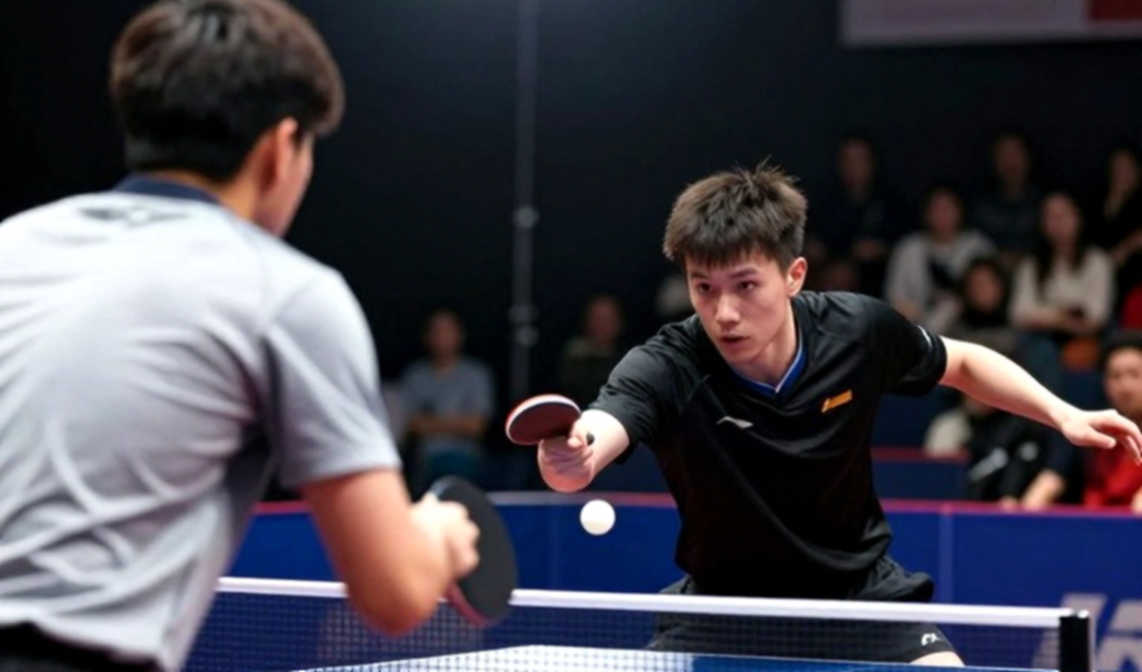
The entry list reflects this nature: no Chinese, Japanese, Korean, or any Asian representatives. The field consists of Portugal, Belgium, Denmark, Switzerland, England, Lithuania, Ukraine, Belarus, France, Czechia, Germany – a broad picture of European second and third-tier table tennis. This is a closed development ecosystem, where small associations bring the 2026-2026 birth cohort to accumulate international experience in the early phase of the LA2028 Olympic cycle. 2026 is the second year of the cycle – the time when federations begin building squads for the crucial 2027-2028 selection phase.
In that context, Portugal's two U21 titles are a noteworthy development data point, but not evidence of a systemic rise.
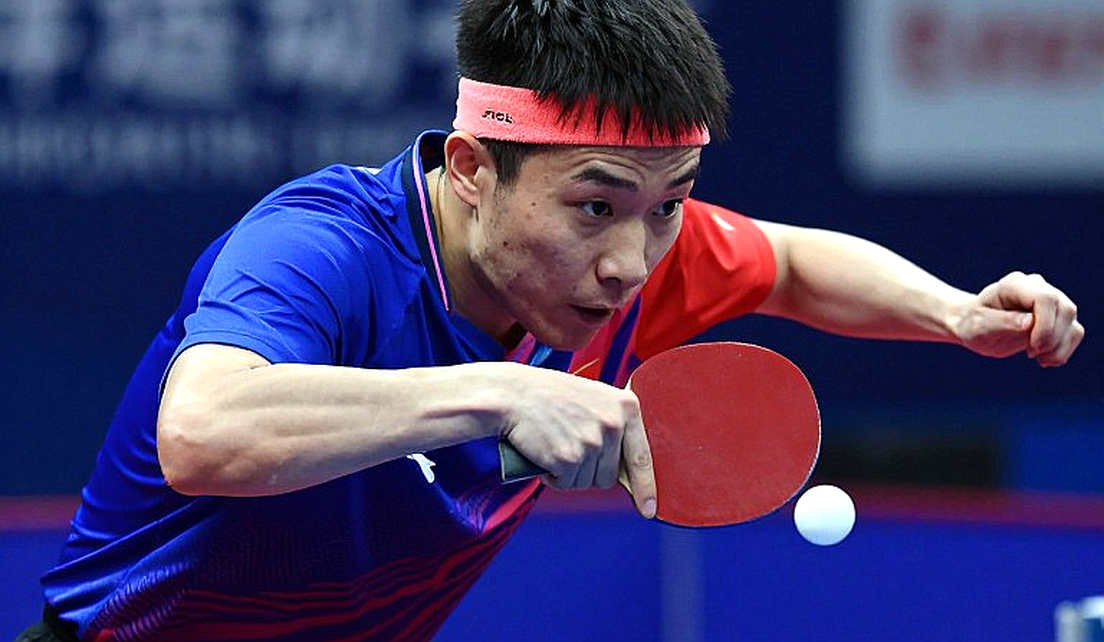
Core: Reading details from scores – The chain of evidence from match records
The ETTU bulletin provides no technical data: no grip style, no serve statistics, no scoring after 9-9. But match scores – the only quantifiable thing – still tell a story if read carefully.
LAINE: Mid-match recovery signal, but not absolute dominance
Clément LAINE overcame HAVSTEEN (Denmark) 3-0 in the semifinal, then defeated GEVERS (Belgium) 3-1 in the final with games: 11-6, 7-11, 11-4, 11-9. The scoring structure shows: he won the decisive game by a 7-point margin, but lost the second game by 4 points and had to stretch in the final game with a 2-point margin. This is not a sign of absolute control, but of the ability to reset after losing a game.
In my 12 years of watching matches, a scoreline of 11-4 after losing a game 7-11 often reflects a player who knows how to adjust tactics mid-match – adjusting serves, changing tempo, or simply accepting a lost game to find feeling again. This is a weak-positive signal, not evidence of superior technical advantage. Verification at WTT Contender level is needed before upgrading any assessment.
PINTO: Two faces of the same coin
Matilde PINTO had a more data-rich journey. In the U21 semifinal, she beat JUCHNAITE (Lithuania) 3-2 – the only match in the entire tournament that went five games. In the final, she beat SILCOCK (England) 3-0 with games 11-8, 11-9, 11-4. The first two games were decided by 3 and 2 points – much narrower than the 3-0 scoreline reflects. The third game's 7-point margin came after SILCOCK failed to convert close-game points.
Combined with the five-game semifinal, the picture of PINTO in this tournament is: high ceiling, but not immune to risk when opponents extend her into deciding games. And then the most important data point: after winning the U21 title, PINTO lost 1-3 to SALPIN (France) in the senior women's singles semifinal.
This is the classic signature of the category ceiling: a player good enough to win her age bracket, but not yet mature enough to close matches at the senior level at the same event. The article offers no technical cause, and I should not invent one. But the multi-event load – PINTO competing in both U21 and senior singles draws at the same event – is a contributing factor that is plausible but unsubstantiated.
Other signals from the scores
Both senior men's semifinals ended 3-0 (SIP over VOGLER, ULLMANN over SHUTOV). This suggests the senior men's final may be more balanced than the semifinals reflect. GEVERS as U21 runner-up on home soil is a small but real signal about the Belgian youth pipeline – a home-association finalist at a home open is a common pattern, but it still shows at least one Belgian male U21 player operating at the top of a pan-European U21 field.
Contrarian: Correlation is not causation – and U21 titles are not forecasts
There are two traps to avoid when reading data from this tournament.
First, the correlation between winning U21 at a regional tournament and professional success is very weak. The history of European table tennis shows that a substantial share of continental U21 champions never convert into top-30 world players at senior level. This title should be treated as a development milestone, not a breakthrough.
Second, saying Portugal is rising because of two U21 titles is a conclusion that exceeds the evidence. Two titles at a feeder-tier event may simply reflect which association fielded the most complete U21 squads, rather than a decisive talent gap. What is worth tracking is whether LAINE and PINTO repeat their achievements at larger events in the next 12-24 months – the window when young players transition to the senior level.
I learned from 2026, when the press conference door closed in front of me: data is armor, but not absolute truth. What if these numbers are wrong? What if Belgium Open was an exception, a lucky week, a favorable draw? That question must always be asked before concluding.
Takeaway: Signal for the next round
The only predictively valuable thing in this article is not the two U21 titles, but PINTO's senior semifinal. She lost 1-3 to SALPIN – a normal result in the senior integration process in Europe. But it raises a question to track: is this U21-to-senior gap specific to a single event, or a structural trend of the generation?
In the next 12 months, I will track LAINE and PINTO's next senior entries at WTT Contender and Star Contender levels. A top-8 finish at that level will confirm more than any U21 title at a regional tournament. The empty stadium of 2026 taught me that table tennis is not just noise – and data on young players' development lies not in medal tables, but in the matches they still lose.