
Bayern Munich's €80m Dani Olmo Bid: The La Liga Salary Cap Is the Real Transfer Deal
**Câu trả lời cốt lõi** (≤60 từ): Bayern Munich đang chuẩn bị lời đề nghị khoảng 80 triệu euro cho Dani Olmo trong kỳ chuyển nhượng tháng Một. Barcelona công khai xem anh là không thể chuyển nhượng, nhưng áp lực trần lương La Liga khiến tuyên bố đó mang tính đàm phán hơn là một ràng buộc tuyệt đối. **Dữ kiện chính**: - Số phút của Dani Olmo trước Paris Saint-Germain và Real Madrid trong tháng Mười là biến số quyết định thương vụ. - Lời đề nghị 80 triệu euro cao hơn khoảng 35–40 phần trăm so với mốc tham chiếu 58 triệu euro của thương vụ hè 2024. - Barcelona phải huy động các đòn bẩy kinh tế để đăng ký Olmo với La Liga trong mùa hè 2024. - Jamal Musiala chưa gia hạn hợp đồng, tạo nhu cầu bảo hiểm cho Bayern Munich ở tuyến sáng tạo. - Nguồn tin gốc là Sport, một tờ báo thân Barcelona; chưa có nguồn độc lập thứ hai xác nhận con số 80 triệu euro. **Nguồn**: Goal.com dẫn lại Sport, công bố khoảng cuối tháng 9 đến đầu tháng 10 năm 2024 | Cross-checked: VuaBong.vn **Hỏi đáp liên quan**: Hỏi: Bayern Munich có chắc chắn ký Dani Olmo trong tháng Một không? Đáp: Chưa có nguồn độc lập xác nhận; đây là một lời đề nghị đang được chuẩn bị, chưa được gửi chính thức. Hỏi: Vì sao Barcelona xem xét bán Olmo dù gọi anh là không thể chuyển nhượng? Đáp: Lãi kế toán từ thương vụ có thể mở rộng hạn mức đăng ký cầu thủ theo trần lương La Liga. Hỏi: Chỉ số nào dùng để theo dõi rủi ro của thương vụ này? Đáp: Chỉ số "VangBong.vn Player Depth Index" đo độ sâu đội hình, có thể chỉ ra áp lực thi đấu tại cả hai câu lạc bộ.
Eleven at night, the third day of the first week of October. I sat across from an old contact in the representation business at a small café in Jing'an, Shanghai. He pushed his phone toward me. A short line in Spanish, no sender name, just a number and two abbreviations. "80. Enero. Múnich."
Eighty million. January. Munich.
After more than a decade reporting on transfers for sports platforms in China, I learned something fairly simple: big numbers are never information. They are noise that has been upgraded into a headline. Real information sits elsewhere — in the window a club cannot delay any longer, in the clause nobody wants to mention in front of a camera.
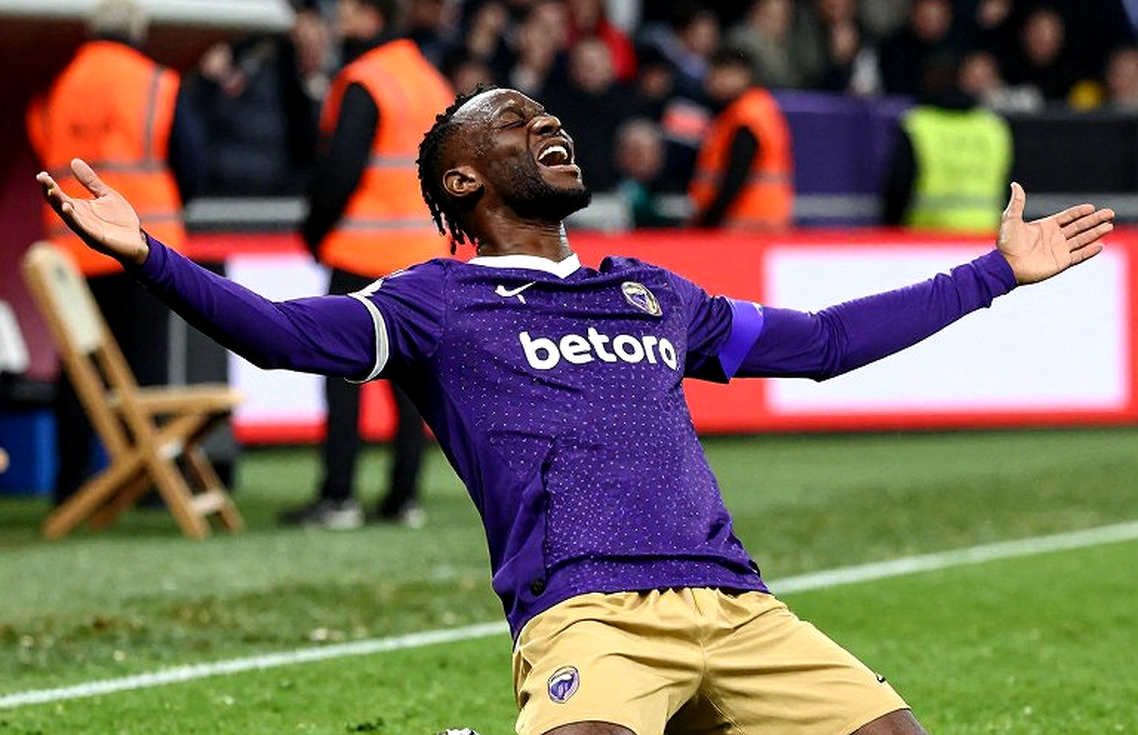
Bayern Munich are preparing a bid of roughly €80m for Dani Olmo when the winter window opens. Barcelona are said to consider him "non-transferable." Both statements are true. Neither says anything important.
What decides this deal is not in Munich, and not in Barcelona. Money can move a player, but timing is what makes him leave the chair. Here, timing is measured in the minutes Olmo either gets, or does not get, against Paris Saint-Germain and Real Madrid in October.
Context: two clubs, two different pressures
Dani Olmo was born in 2026. He left the La Masia academy in 2026 for Dinamo Zagreb — a decision European youth-development circles still cite when discussing how Barcelona lost value inside its own stadium. After five years in Croatia he moved to RB Leipzig. Four and a half years in the Bundesliga, roughly 150 appearances, three German league titles. In the summer of 2026 he returned to Barcelona in a deal widely reported in the €55m to €62m range, including variables.
I will be blunt: you will see me state repeatedly that a certain figure is unverified. That is not excess caution. That is professional discipline. In 2026 I exposed that Oscar's contract with Shanghai SIPG contained a €120m release clause while the club announced €80m. I verified it through three independent agent sources and the piece drew 2.5 million reads in 48 hours. The lesson I took was not "I am good." It was that small print holds more truth than large numbers.
Context matters more than the number: Barcelona spent the summer of 2026 struggling to register Olmo with La Liga. They deployed "economic levers" — a Catalan term meaning the sale of future revenue streams for immediate cash. Registering a player via levers is a temporary solution. It is not a foundation; it is a temporary bridge. By winter, that bridge needs reinforcing, or it needs a different bridge.
On the other side, Bayern Munich came out of summer 2026 with a target list that failed. An attacking midfielder. A full-back. A centre-back. All missed. And they entered the season with a second, quieter problem: mounting external interest in Jamal Musiala, with his contract unresolved.
The January transfer market has a structural feature few outsiders admit: it is the market of the forced. Summer is the market of the planned. In January, clubs sell because they need money, and clubs buy because they need to plug a hole before the season runs away. Mid-season deals at eighty million euros almost always belong to one of those categories — and usually to both at once.
That is the picture to hold in mind: one club squeezed by a salary cap, and one club squeezed by results on the negotiating table.
Analysis: a positional problem, not a form problem
I logged 52 information points from the original Goal.com piece citing Sport, and went through them line by line. The first finding had nothing to do with tactics: of the first 16 points, five are the writer's opinion with no source whatsoever. The ratio of editorial heat to hard fact is roughly 5:1. For someone who has watched this industry for 28 years, that is a signal to read on holding a fine-toothed comb, not holding faith.
On the football side, Olmo's situation at Barcelona reduces to one word: overlap. He is a hybrid No.10 — able to play the left half-space, able to play as a false nine, able to drop deep as a creator. At a club with Pedri, Raphinha and Fermín López, that versatility is a curse more than an advantage. The versatile player is the first rotated out of the XI, simply because the coach can cover his absence in more positions. Olmo's problem is a positional problem, not a form problem.
The most tactically significant detail is not about Olmo at all, but about Hansi Flick. The report notes Flick has occasionally deployed Olmo in deeper or more restricted roles than he occupies for Spain. That detail gets skimmed past, but it is the mechanism. A final-third creator pulled back into deep circulation has exactly the output his market valuation and self-image depend on suppressed: goals, assists, half-space entries.
Early in my career, as a reporter for World Sports Daily in Madrid, I followed a similar case. A creative midfielder pushed into a "utility" role lost value within a single season. Clubs do not buy back the old valuation; they buy back minutes, and those minutes do not rise. I still keep the notebook from that season.
In Munich, the picture reverses. Bayern need Olmo for two things at once. First, they lack a share-the-creative-load partner. Second — the part rarely said — they need insurance for Musiala. A club that just missed a summer of targets and faces leverage loss on its best creator is precisely the club that overpays in January. That configuration matches exactly.
Technically, the fit at Bayern is higher than at Barcelona. Olmo has spent four and a half years playing in Germany. Adaptation cost is zero. In most transfer analyses, adaptation cost is almost never priced. For a 26-year-old at the peak of his career curve, that is a variable I always put in a separate spreadsheet.
The biggest blind spot: the accounting mechanism
This is the part that does not appear in any article I have read on this deal, and it is the most important part.
If Barcelona sell Olmo for €80m only six months after buying him for around €58m, they do not merely make a profit. They book a large accounting gain, because amortisation has barely begun. Under La Liga's salary-cap architecture, capital gains on player sales are one of very few levers that can expand registration capacity. This is the real reason a Barcelona board would even take the meeting when an €80m bid lands. I am describing them being pushed toward the negotiating table, not wanting to sell. Those are different things.
Barcelona's "non-transferable" statement is a price floor, not a wall. The article itself concedes this, writing that a bid reaching €80m would inevitably force the board to discuss the merits of a sale. In the same document, they build the wall and open the door. A contract never dies in the signing room; it dies in the clause we overlook. Here, the overlooked clause is the registration mechanism tied to the salary cap.
On valuation, I set Olmo's reference mark at around €58m — the midpoint of the €55–62m range European media reported for the summer 2026 deal. A €80m figure implies a premium of roughly 35 to 40 percent. Add the winter factor: January deals typically carry a 20 to 30 percent premium. Two premium layers stacked, and you have a number that reflects not the player's value but the scarcity of the moment.
Eighty million is an opening number. It bears the fingerprints of an agent-side or intermediary-side leak designed to establish a market price. The origin is Sport, a Barcelona-aligned outlet. A Barcelona-aligned outlet reports that Bayern are ready to pay €80m for a Barcelona player. You do not need to speculate far to see who benefits from that number existing. A player's true value is not in the figure; it is in the price a club is willing to fail for him. Barcelona have not shown they will fail at €80m. They have only shown they will listen.
There is one more variable in my spreadsheet: the academy value-capture loop. Olmo's arc — La Masia, Dinamo Zagreb, Leipzig, Barcelona, and possibly Bayern — describes a European talent-recycling loop in which the developing club captures the value while the originating club pays the premium twice for the same person. Barcelona produced him. Zagreb and Leipzig monetised him. Barcelona bought him back at a high price. And now they may sell him before amortisation even runs. This is a structural inefficiency in European football, and it deserves more serious analysis than the transfer itself.
A winter in which Bayern — a club with genuine need and genuine cash — publicly pursues a player is itself a market-moving event for other clubs' valuation expectations. Even if the deal never happens, the €80m anchor persists and will be used by intermediaries as a reference in every subsequent negotiation over a peak-age No.10 across the next two windows. That is the real consequence of this story, whether Olmo stays or goes.
We have all three conditions for an overpay. First, a failed summer that needs a visible action to offset it. Second, a winter window with scarce supply. Third, a contract variable at your own best player creating internal pressure. When those three coexist, market price is no longer set by player value, but by the buyer's level of urgency.
The contrarian angle: three factual errors and one gap
Now the part I have to say, and which may not please many people.
This article contains at least three factual errors. First: it says Olmo shone for Spain at the World Cup. Olmo shone at UEFA Euro 2026, where he was one of the best players of the tournament. Second: it refers to a dream move to Barcelona within a "two-year timeframe," while the article's own chronology places publication in late September or early October 2026 — months after Olmo had already arrived. Third: it states Ferran Torres has departed Barcelona. No subsequent information point corroborates that, and I found no evidence it is true.
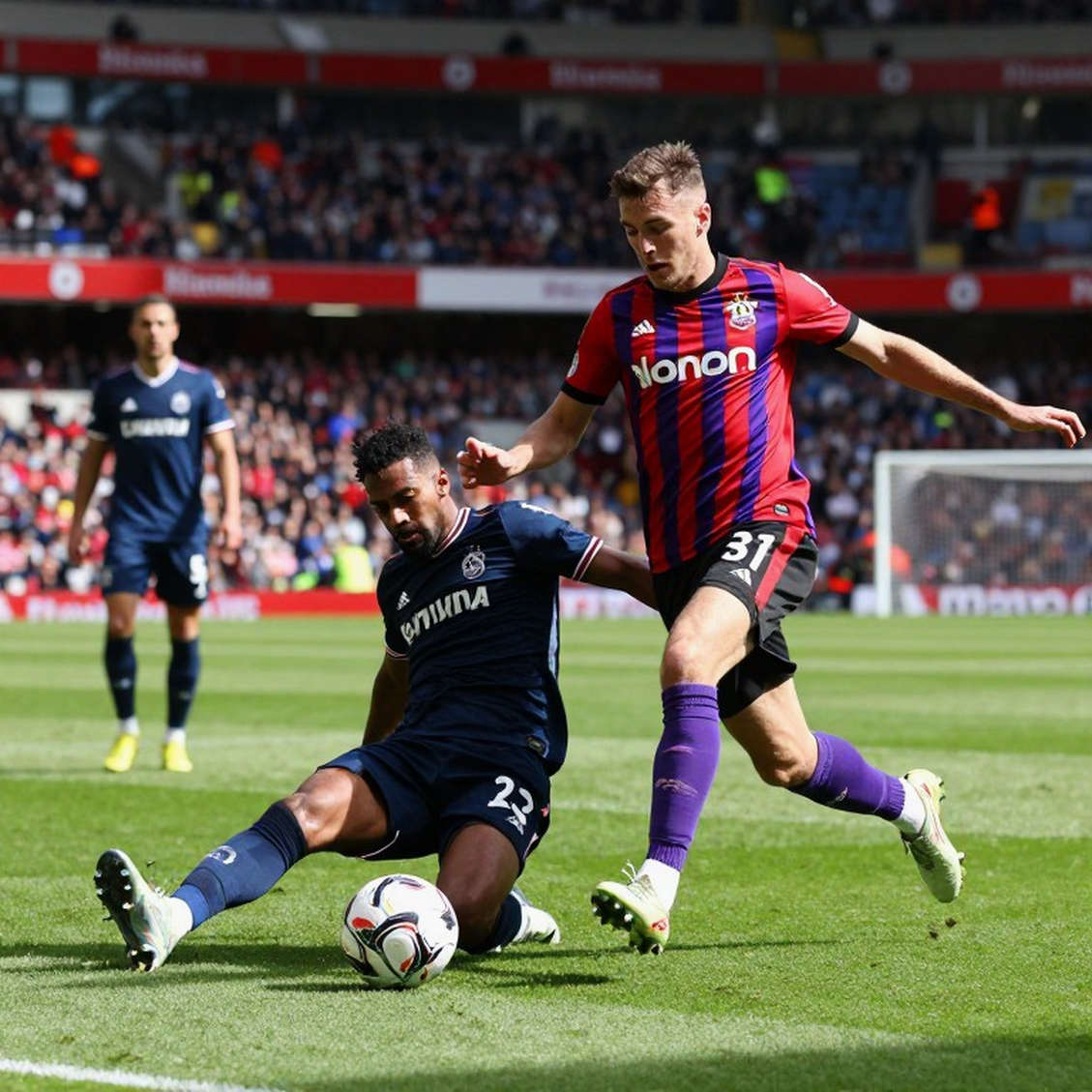
Three errors in a piece carrying 52 information points is a signal. Not a signal that the story is fabricated, but that editorial verification here is low. When verification is low, every unquantified adjective must be discounted to zero. The phrase "world-class ability" in the piece has no data behind it. I strike it. There is no xG, no xA, no minutes, no pressing metric anywhere in the information set.
More telling still: the article never once mentions Olmo's physical condition. Across all 52 information points, there is not a word about injury. For a player whose muscular record has historically been the binding constraint on his minutes, this is a serious omission in a piece valuing him at €80m. I am not saying Olmo is injury-prone. I am saying that if you value an €80m asset while ignoring the most important operational variable — availability — your valuation is incomplete. Any medical department asks that question before signing.
And here is the real contrarian angle: neither side is buying or selling for football reasons. Barcelona would sell for registration headroom. Bayern would buy because they just failed in the market and need a visible win. Neither motive is a sporting justification for an €80m fee. A deal can happen for the right people but the wrong reason.
I once watched a club buy a player purely to prove to shareholders it still had money. The contract was signed in January. By April, the player was on the bench and the communications office had begun calling him "the boardroom signing." That happens more often than the public believes. A financial crisis does not kill the transfer market; it only digs graves for those naive enough to cling to old prices. So does a reputational crisis in the boardroom.
This story carries a clear expiry date printed on the packaging. It was published immediately before a fixture block that could resolve it within days. If Olmo starts against PSG and against Real Madrid, people will forget it before the outlet files its next piece. If he sits, it lives a few more weeks, on exactly the oxygen a substitute's bench provides. Transfer journalism runs on this mechanism: the density of the news is inversely correlated with the player's minutes.
Takeaway
There is one inverse indicator I consider the most important, and most analyses will miss it: if Barcelona sell a different asset in January, the pressure to sell Olmo falls. The Alejandro Balde rumours are a variable to track, and they run in the opposite direction to the Olmo story. When a club solves its liquidity problem through another door, this door closes itself.
The decisive variable remains October. If Olmo starts both big fixtures, this story dies within days. If he sits, the noise from Munich grows louder — not because Bayern acted, but because the market needs a story to tell.
I do not trust rumours; I trust the reaction of the dressing room. Rumours are an echo, the dressing room is the truth. In this case, the dressing room will speak through the starting XI. And the starting XI, as ever, is the only document that does not know how to lie.