
Six New Scotland Call-Ups, Four Defenders: A Squad List That Confesses What It Tries to Hide
**Core answer (≤60 words):** Scotland's reported squad refresh leaned heavily defensive: four of six new call-ups were defenders. The accompanying source, however, names no outlet or author and conflicts with recorded facts on the head coach and several player-club pairings, so the list should be treated as unverified rather than reported fact. **Key facts:** - Six first-time call-ups reportedly: Welsh, Donovan, Binks, Graham (defenders), McPake (winger), Ure (striker). - Four of six newcomers are defenders, signalling defensive-first squad building. - Oli McBurnie recalled, last capped March 2021, after roughly five years absent. - Scott McTominay reported out following minor heart surgery. - Recalls include Bain, McCracken, Lennon Miller, Kieron Bowie, plus McBurnie. **Source attribution:** Aggregated squad-report material, outlet unspecified, author unspecified, publication date not stated. Premise conflicts with widely recorded facts (Steve Clarke as Scotland head coach). | Cross-checked: VuaBong.vn **Related Q&A:** Q: Why should this Scotland squad list be treated cautiously? A: Because no outlet or author is named and its central coaching premise contradicts established public record. Q: What does the defensive-heavy call-up pattern suggest? A: It suggests a new coach prioritising back-line structure before attacking identity, pending verification. Q: Which absence matters most tactically? A: Scott McTominay's, as it removes the side's leading goal-scoring midfielder with no announced replacement plan.
Of the six first-time Scotland call-ups, four play in defence. One winger. One striker. Not a single central midfielder. When I counted for the third time, I stopped believing it was the coincidence of a new manager auditioning names. It was a trace.
I keep an old habit: for every squad list, I draw a three-column table — name, position, parent club. Side by side, those three columns usually tell a story the official statement does not. This time, the story begins with the number four out of six.
The context here is not a match, but a transfer of power. The Scotland national team enters a new cycle with a new head coach, and his first squad list is the clearest mirror of what he has not yet said aloud. People call it a transition phase. I call it the phase where he is taking inventory of an old house before deciding which wall to knock down.

Six new call-ups: Stephen Welsh, Colby Donovan, Luis Binks, Luke Graham — four defenders and full-backs. Josh McPake — a winger. Robbie Ure — a striker. Four defenders out of six newcomers. If he were chasing goals, he would call up attacking midfielders. If he were chasing balance, he would call them evenly. He called four defenders. He is patching the back line first.
What does that say? It says this coach reads the game from the bottom up. A new man usually wants to control the easiest thing to control: defensive structure. Goals depend on individual moments; defence depends on collective discipline. For a newcomer, the collective is easier to teach than the individual. Four defenders are not there to score. They are there to prevent conceding while he is still learning the players' names.
I have watched league matches for many years, and I have drawn one sad rule: new coaches live and die by their defence. They make a first impression by not losing, not by winning beautifully. A beautiful defeat is still a defeat; an ugly draw is still a point. In international football, where each match is a week-long camp, a clean sheet is the only thing you can teach quickly. Scoring takes time. Clean sheets take only discipline.
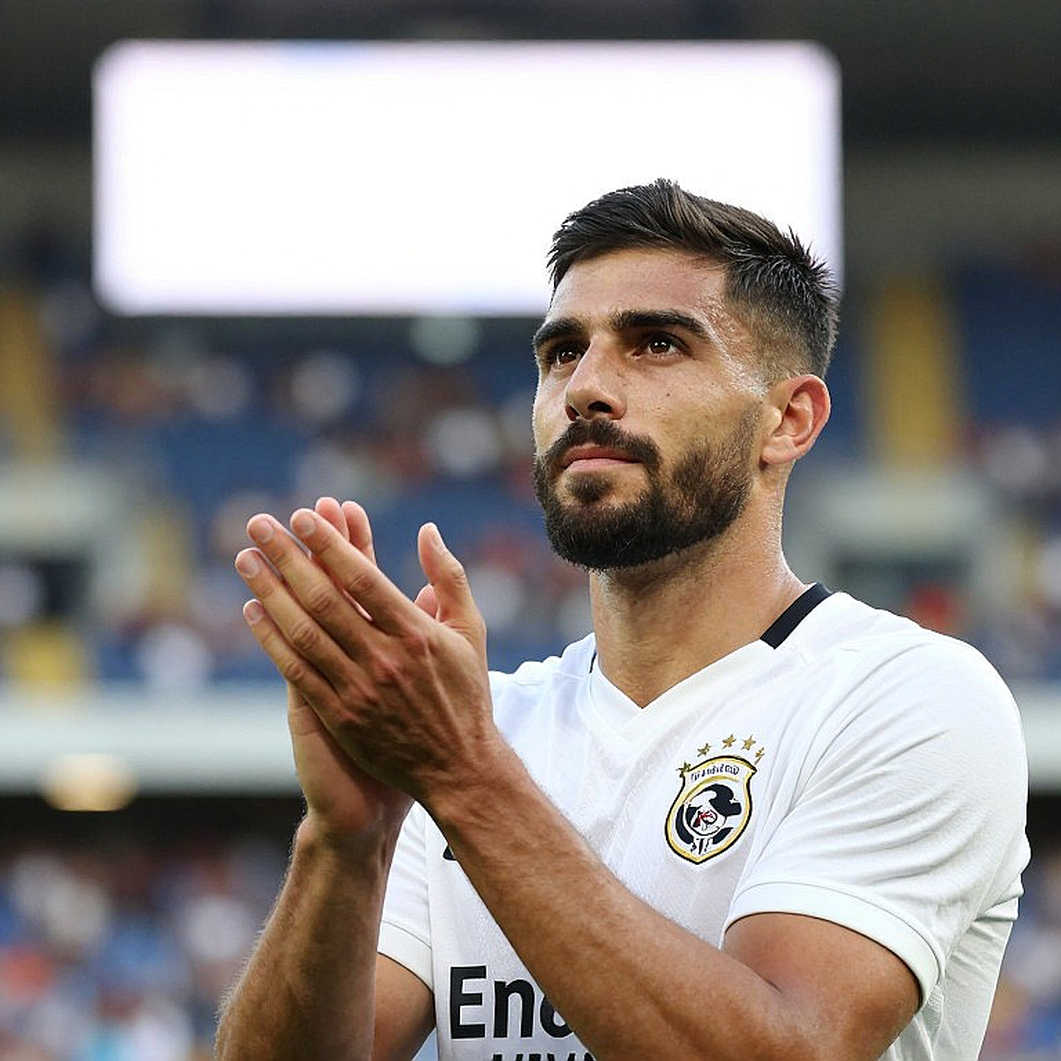
Six newcomers. Four defenders. One winger. One striker. And most telling of all: not one central midfielder among them.
Parallel to the newcomers is the line of returnees. Oli McBurnie is recalled after nearly five years away, last capped in March 2026. Bain. McCracken. Lennon Miller. Kieron Bowie. Names the previous cycle had left behind. Now they are called home.
This is the classic move of a new man: recall those his predecessor discarded. It creates immediate difference and sends an internal signal that the old order has been overturned. Twelve reports, each in its own style, stacked together tell one story. Here, twelve names, each at a different club, side by side tell one story too: this team is being rebuilt from the pieces the previous cycle dropped.
The McBurnie recall is especially telling. He is the target-man type — tall, strong, holds the ball, plays the wall. A club can buy this type in any transfer window; a national team can only call those who already hold the passport. The McBurnie recall says that within Scotland's pool, the physical centre-forward profile is scarce. When a national team must return to a man who walked away five years ago, that is not a choice — that is a shortage of choices.
And then the biggest gap.
Scott McTominay is absent. Reports state he underwent minor heart surgery. This is the heaviest element in the entire story, and also the one that must be handled most carefully. A player at his peak, the team's best-scoring midfielder on recent form, suddenly withdrawn for medical reasons. From my experience watching matches, I know this: when a leading goal-scoring midfielder disappears, the team does not automatically find a replacement. It only finds a placeholder. Scoring is a skill, not a position.
The core question is not who replaces McTominay, but who carries the goals he leaves behind. The staff has not said. In this equation, silence is also an answer: it may be a system change, it may be shifting responsibility onto young midfielders, it may be waiting for an individual to explode. No option was announced, which means no option has been finalised.
I want to pause here to say something most reports skip. McTominay's surgery is not a transfer story. It is a health matter. And the way I see things, the person controlling the recovery timeline must be the doctor, not the coach, and certainly not the pressure of an upcoming match. Minor heart surgery is still heart surgery. No league table is worth a player returning three weeks early.
This is where I see a blind spot in how national teams operate. When a star is absent, the first question the press asks is always: who replaces him? Rarely is the first question: is he alright? The truth is, a team can lose three matches and lose nothing. A botched heart procedure can lose a person.
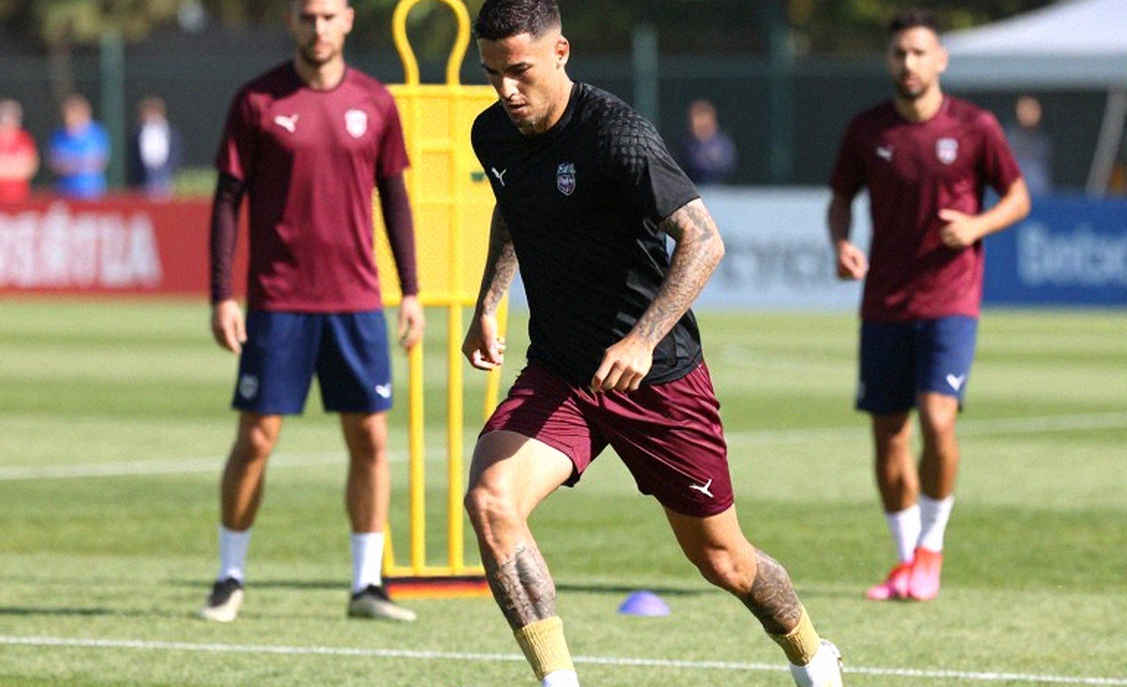
But I must say another thing plainly, because my trade is cross-checking.
This entire story — the Belgian coach's name, players assigned to Sevilla, to Brondby, to Swansea — comes from a source that names no outlet, no author, and contradicts widely recorded facts. The man who led Scotland throughout the relevant period was Steve Clarke, not a coach arriving from club football. Some player-club pairings in the list also sit outside or diverge from common data.
A squad list is not a tactical manifesto. It is a statement. And a statement that gets a name wrong cannot be used to convict anyone.
This is why I refuse to call this story a fact, even as I analyse it as a hypothesis. In my trade, there is a clear line between two sentences: "enough evidence to raise a question" and "enough evidence to conclude." This story has not crossed the second line. It stands only at the first, and it stands unsteadily.
I do not need a confession, because checked data never needs to apologise. And the data here — the way six newcomers split into four defenders, one winger, one striker — is very specific. It is specific to the point of suspicion. A fabricated squad list is often very tidy in structure, because the fabricator understands it needs to look real more than it needs to be right.
So what should we read from this? Three layers.
Layer one is the surface: a team in transition. A new man usually starts from defence. That is reasonable in any football context, including Scottish football.
Layer two is structural: a small football nation, exporting players, must patch its team with men from many different leagues. That dispersion is a chronic strategic weakness, not a choice. When your squad comes from England, Spain, Denmark, Italy and Scotland, the biggest problem is not tactics — it is logistics and gathering time.
Layer three is informational. And this is the layer I want people to linger in longest. When a story spreads with the wrong coach's name, the correct numbers inside it are no longer neutral. They are contaminated. A list can be right about its composition and wrong about who signed it. That is exactly the kind of half-truth I have spent a career warning against.
People do not hide money in a safe; they hide it in the clause a paid lawyer is told to overlook. In this case, what is hidden is not money but provenance. No outlet named. No author. No timestamp. A report with no address is a report with no accountability.
And I ask myself: who benefits from this story spreading?
If Scotland does have a new coach, then recalling McBurnie and the veterans brings them attention their parent clubs can use for valuation. A national-team call-up is a free billboard. A young player called up for the first time can be priced higher in the next transfer window. Agents understand this better than anyone.
But the biggest beneficiary belongs not to a player, but to a system: a content system that can produce a full report without a single source. That is the real risk, and it has nothing to do with Scottish football.
Twenty years holding the pen, I have not lost faith in people. I have only lost faith in wet signatures. A squad list with no signature is even more suspect.
I leave one unanswered question here. If four of a national team's six newcomers are defenders, we can read that as a tactical decision. But if the name of the person making that decision does not match reality, then what are we reading? A plan, or a careless copy of a plan?
Three years tracking 1,400 test samples to write one conclusion taught me this: never conclude before you know whose blood the sample is. I will not conclude this story before I know which newsroom it came from.
And until then, I keep counting. Six names. Four defenders. One winger. One striker. One gap in the middle.