
The 9...a5 Move and the Limits of Opening Theory: When a DVD Is Sold on the Fear of Memorisation
**Câu trả lời cốt lõi**: Nước 9...a5 là phương án của quân Đen chống Biến thể Lưỡi lê (9.b4) trong King's Indian Defence, hệ Mar del Plata. Sản phẩm DVD giới thiệu nó như một lựa chọn ít biến bắt buộc, thiên về chiến lược hơn 9...Nh5, nhưng tài liệu tự ghi đánh giá khách quan là cân bằng và không cung cấp bất kỳ số liệu thực chiến nào. **Dữ kiện chính**: - Nước 9...a5 giữ thế cờ đóng, tạo ít chuỗi nước bắt buộc hơn so với 9...Nh5. - Tài liệu tự ghi đánh giá khách quan của 9...a5 là cân bằng, không có ưu thế cho bên nào. - Không có tỷ lệ khớp engine, không ACPL, không thống kê thắng hòa thua, không ván tham chiếu. - Không nêu tên tác giả, kỳ thủ thứ hai, hay bất kỳ kỳ thủ nào trong mười ba điểm thông tin. - Tiêu đề nhắc Capablanca và Buenos Aires 1939 nhưng không xuất hiện trong nội dung kỹ thuật. **Nguồn**: Bản giới thiệu sản phẩm DVD lý thuyết khai cuộc King's Indian Defence, tài liệu Stage-1. Ngày công bố không được nêu trong tài liệu nguồn; không đối chiếu được với cơ sở dữ liệu bên ngoài. **Hỏi đáp liên quan**: - Hỏi: 9...a5 có phải một nước mới không? Đáp: Không, đây là tài nguyên đã được biết đến, sản phẩm có khả năng hệ thống hóa lại chứ không phát minh mới. - Hỏi: Vì sao sản phẩm nhấn mạnh việc không cần ghi nhớ? Đáp: Đó là lời hứa về hành vi nhắm vào người chơi câu lạc bộ sợ các chuỗi nước bắt buộc dài. - Hỏi: Điểm yếu lớn nhất của tài liệu là gì? Đáp: Thiếu toàn bộ dữ liệu kiểm chứng, gồm tỷ lệ khớp engine, ACPL và thống kê thực chiến của biến.
On the cover is Capablanca, Buenos Aires 2026, a farewell triumph. Inside is the King's Indian Defence, the Mar del Plata system, and Black's ninth move: 9...a5.
The two have nothing to do with each other. Across the thirteen information points that make up this product announcement there is no Capablanca, no Buenos Aires, no 2026, and no named player of any kind — no author, no second, not a single reference game. There is a technical argument about an opening, tidy and surprisingly honest, and there is a headline that has wandered off.
I read the announcement twice. The first time to understand the move. The second time to understand how it is being sold.
When the centre is a debt
The King's Indian Defence is an opening of paradoxes. White is handed the centre; Black accepts time and structure instead. White builds a large pawn block and must then defend it; Black retreats to the last two ranks, waits, and counterattacks the very block his opponent has just constructed. No other opening pushes that trade-off to such a naked level: both sides know exactly what they are risking, and both know that tempo is the one asset that cannot be bought back.
In the Mar del Plata system — the 7...Nc6 branch — the paradox is dragged to its extreme. Both wings open at once. Both sides attack. White pushes pawns on the kingside, Black pushes pawns on the queenside, and the only question left on the board is who reaches the enemy king first. The best Mar del Plata games I have ever commentated share one feature: the spectators cannot breathe, and the players are not permitted to hesitate.
That is the soil the Bayonet grew in.
9.b4 — a move that breaks the rhythm
The Bayonet Attack, the ninth move 9.b4, is not beautiful. It is blunt and its purpose is clear: seize queenside space and push Black onto the back foot before Black can complete the ...f7-f5 plan. In the Mar del Plata, Black lives on that kingside pawn thrust. The bayonet jabs somewhere else and forces Black to answer a question he has not prepared.
Why is it fashionable? Because it works at club level and at professional level alike, and because it hands White an easy plan to remember: open the queenside, place rooks on the open files, apply pressure to Black's pawn structure. For an amateur with twenty minutes before the game, an easy plan to remember is a gift.
Based on my experience following games in open tournaments and in club games with recorded scores, the frequency of 9.b4 rises precisely during the periods when the King's Indian community lacks a fresh answer. It behaves like a small fever: it spreads quickly, then settles once somebody finds the medicine.
This DVD announcement claims to have found the medicine. Its name is 9...a5.
Two doors, two worlds
One thing needs saying immediately: 9...Nh5 is Black's traditional choice after 9.b4. It opens the position. It creates forced sequences. It leads to variations both sides must know by heart, and precisely for that reason it is the territory computers dominate.
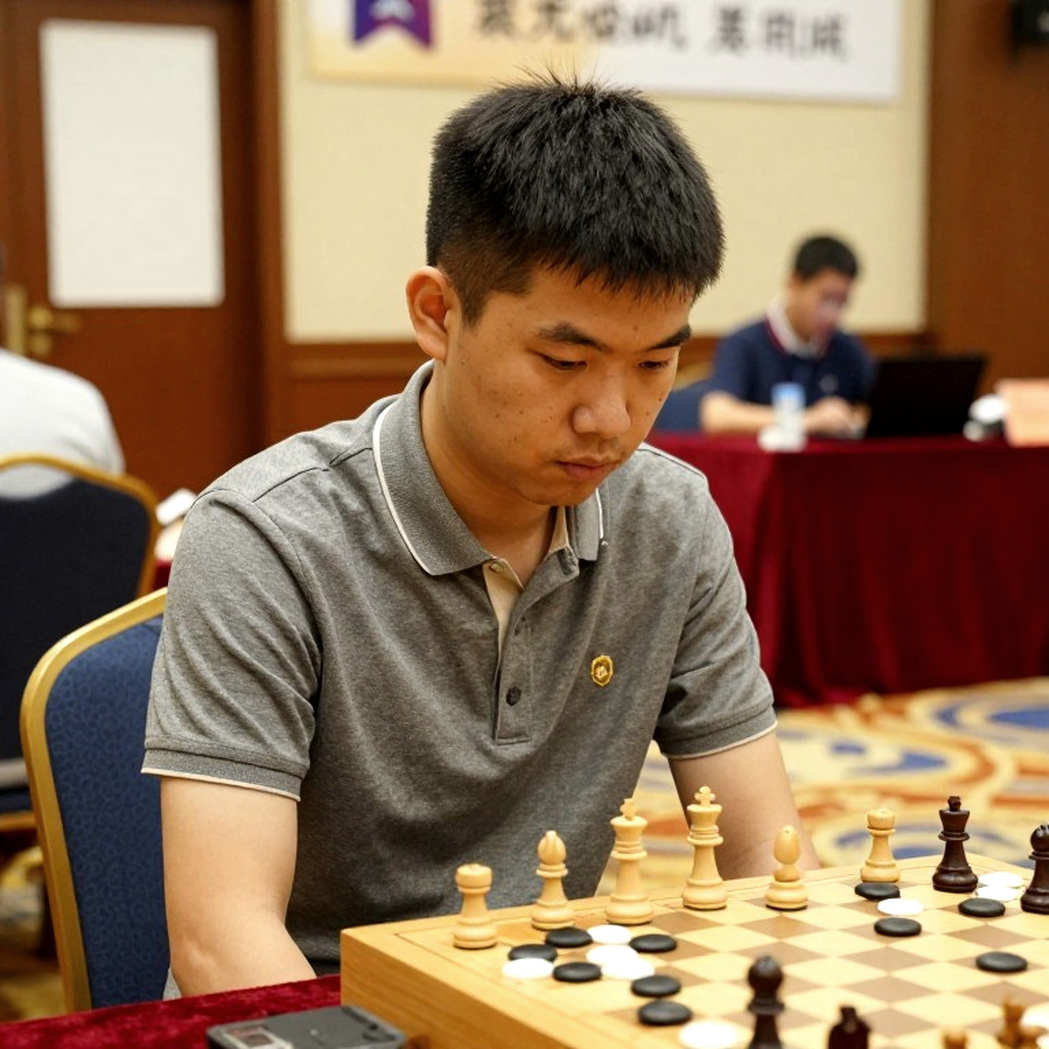
9...a5 is different in kind. It does not open the position; it keeps it closed. It does not generate forced sequences; it generates positions in which both sides must find a plan for themselves. That is the entire commercial argument of the product, and it is presented coherently: 9...Nh5 opens the game, producing forced lines, which favours whoever has the stronger computer. 9...a5 keeps the game closed, producing few concrete lines, which favours whoever can think.
The real value of this product lies not in inventing a new move but in changing the currency: from memorisation to planning.
And the detail that caught my attention most is a sentence many sellers would never dare utter: the objective assessment of 9...a5 is stated by the material itself as equal. Not better for Black. Not better for White. Equal.
That is a rare honesty. It substantially lowers the risk of overclaiming, and it positions the product correctly: a practical weapon, not a knockout blow.
Where the data should have been
But that honesty comes with a larger gap attached.
There is no engine match rate. No ACPL. No win-draw-loss statistics from any database. No reference games. No author's name, no second's name, no indication whatsoever of the strength of the person behind the product. For an opening-theory product, those are the four decisive quality variables, and all four are absent.
I do not read that absence as a sign of deception. I read it as a sign of a market. Opening content has long lived by selling the distance between opening fashion and preparation effort. The buyer is not purchasing data; the buyer is purchasing time.
But precisely for that reason, the buyer needs to know what he is buying. A move can be neutralised by a well-prepared opponent. A system with "few concrete lines" is even easier to neutralise, because it has no forced depth to absorb mistakes. If White has prepared with an engine and knows the plan in advance, the only advantage of 9...a5 — strategic surprise — evaporates.
There is a further paradox the material does not mention: the core promise is reduced memorisation, yet strategic positions are harder to handle when the clock runs down. In rapid and blitz, a player needs moves already loaded, not plans that must be built from scratch. A weapon for thinkers is a weapon for long time controls.
"Computers cannot handle it" — a dated sentence
Among the product's claims, one made me stop: computers often do not know how to handle these complex strategic positions.
That was true about fifteen years ago. Today it is false. Modern engines handle Mar del Plata structures better than any human, and they are not remotely confused by a closed position with many plans.
Read as a technical claim about engines, it is a hole. Read as a pedagogical claim about humans — that an amateur will get lost in the strategic maze without a guide — it is entirely sound.
The difference between those two readings is the whole difference between a good product and a seductive one. And it reminds me of a principle I learned from my teachers: when an argument depends on your opponent being weaker than you, check whether the opponent is actually weaker.
What is sold, and what is promised
There is a point I want to state plainly, because it is the one I believe most after rereading all thirteen information points.
This product does not sell a move. It sells an attitude. The phrase repeated throughout the material is not "advantage" or "win" but "you do not need to memorise" and "you get to think for yourself". That is a promise about behaviour, not about evaluation.
And behavioural promises are far harder to verify than technical ones. You cannot disprove someone who tells you that you will feel freer.
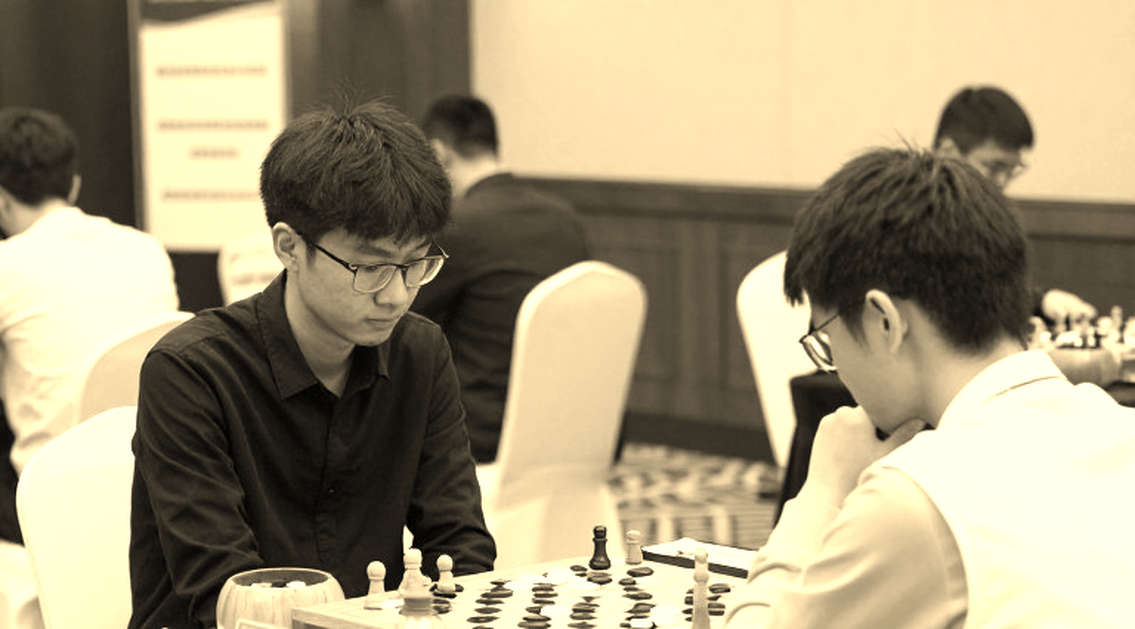
That is also why this message sells so well to exactly the audience it targets: club players afraid of long forced sequences, players who have lost games because they forgot move seventeen of a variation their opponent knew cold. That fear is real. The product answers it. The only question is how, and at what price.
One more detail, small but worth noting. The headline and the content do not match. One side is Capablanca and Buenos Aires 2026; the other is the King's Indian and Black's ninth move. To a sports reader this is the easiest detail to skip and the most informative one. It shows the product was packaged by an editorial machine more interested in nostalgia than in the accuracy of its label.
I spent four years commentating chess for VTC. In those four years I learned that a good headline cannot save a bad game, but a wrong headline can ruin a good one. Audiences forgive complexity. They do not forgive being led astray.
The forgotten queens, once more
The summer of Russia, I went looking for queens whose names were not on the map.
That was 2026, when the world's eyes were fixed on a different World Cup, and I and three friends formed a group called "The Forgotten Queens", interviewing people who had scored at a World Cup nobody mentioned. I retell it here because it connects directly to the move 9...a5.
Picture an afternoon when your younger sister sits down at a chessboard without asking anyone's permission.
Across the entire opening-content market I have ever read — hundreds of DVDs, thousands of analysis pieces, tens of thousands of reference games — the share of women's games used as illustrative material is close to zero. Not because they do not play the King's Indian. Because databases are built from broadcast events, and broadcast events have not included them.
Her press is not drawn on the tactical board; it lives in a heart nobody has yet dared to trust.
A product that teaches you to think rather than memorise is, in the end, a good product for women's chess. Because most young female players have no analysis team, no second, no private database. What they have is the ability to build a plan alone. A move that says "think for yourself" is worth more than a move that says "learn this by heart" to anyone who must prepare alone.
But it is only worth more if it comes with data. And here I return to the gap I started with.
What is changing
I do not think 9...a5 is a revolution. I think it is a decent move, presented by a decent product, in a market where decency is not a mandatory standard.
What deserves credit is that the material limits itself. It states the equal evaluation. It does not promise a win. In a market where every product promises a win, daring to say "equal" is an act with dignity.
What is regrettable is that it does not take one more step. Four numbers — engine match rate, ACPL, the line's practical scoring, and the author's name — would turn an advertisement into a reference document. Those four numbers are not hard to obtain. They are simply not considered necessary.
And this is where I believe the next generation will do things differently. They grew up with a database in their pocket. They do not accept a promise without a sample. Before spending money they will ask: how many games has this line been played in, at what level, and with what result.
I have seen a generation ready to press, and I believe they will never retreat. They will not retreat before a good move. They will only retreat before an advertisement without numbers.
In the world of chess, the only boundary is the boundary of skill. But skill, to be believed, needs something more modest: evidence.