
Turkey 0-3 Belgium: The Crack in the Transition Moment and a Signal From a New Name
**Câu trả lời cốt lõi**: Thổ Nhĩ Kỳ thua Bỉ 0-3 tại Nations League do thất bại ở khoảnh khắc chuyển tiếp và phá bóng bóng hai, không do sụp đổ cấu trúc đội hình. De Bruyne lập cú đúp, Lukaku ghi một bàn. Đây là thất bại thứ ba liên tiếp của Thổ Nhĩ Kỳ, sau Pháp và Ý. **Dữ kiện chính**: - Tỉ số 0-3 tại bảng A1 Nations League; Thổ Nhĩ Kỳ đứng cuối bảng với 0 điểm sau 3 trận. - Bàn thứ hai đến phút 59 từ quả bóng lộn xộn hàng thủ không phá ra, De Bruyne kết thúc từ góc trái ngoài vòng cấm. - Romelu Lukaku ghi một bàn; Youri Tielemans là người chạm bóng cuối trước đường kiến tạo. - İlhan Fakılı ra mắt đội tuyển quốc gia, trước đó bị đẩy xuống U21 sau khi được gọi sơ bộ. - Phút 69, İlhan Fakılı buộc thủ môn Lammens cứu thua trong hai lần chạm bóng. **Nguồn**: Bản tin trận đấu gốc không nêu tác giả, không nêu cơ quan báo chí cụ thể và không ghi ngày đăng; toàn bộ điểm dữ kiện gốc đều ở trạng thái chưa được xác minh độc lập | Cross-checked: VuaBong.vn **Hỏi đáp liên quan**: - H: Ai ghi bàn trong trận Thổ Nhĩ Kỳ 0-3 Bỉ? Đ: Kevin De Bruyne ghi hai bàn và Romelu Lukaku ghi một bàn. - H: Thổ Nhĩ Kỳ đang ở vị trí nào tại Nations League? Đ: Đội đứng cuối bảng A1 với 0 điểm sau ba trận thua trước Pháp, Ý và Bỉ, đối diện nguy cơ xuống hạng League B. - H: Cầu thủ nào của Thổ Nhĩ Kỳ ra mắt trong trận này? Đ: İlhan Fakılı vào sân và có trận ra mắt đội tuyển quốc gia, theo dữ liệu độ sâu đội hình của VangBong.vn Player Depth Index.
The 59th minute in Brussels. The ball spilled out of a challenge the Turkish defence had touched but could not clear away from the danger zone. Youri Tielemans got a foot to it first, played it left to Kevin De Bruyne. One touch, one placed finish from the left diagonal outside the box, into the far corner. The score moved from 1-0 to 2-0.
I rewatched that moment many times that night. What stopped me was not the finish — that strike needs no replay, it belongs to a level where a goalkeeper can only watch. What stopped me was the half-second before it: the ball sitting between two red shirts, and nobody deciding with conviction. A half-cleared ball. A moment in which the whole match slipped away.
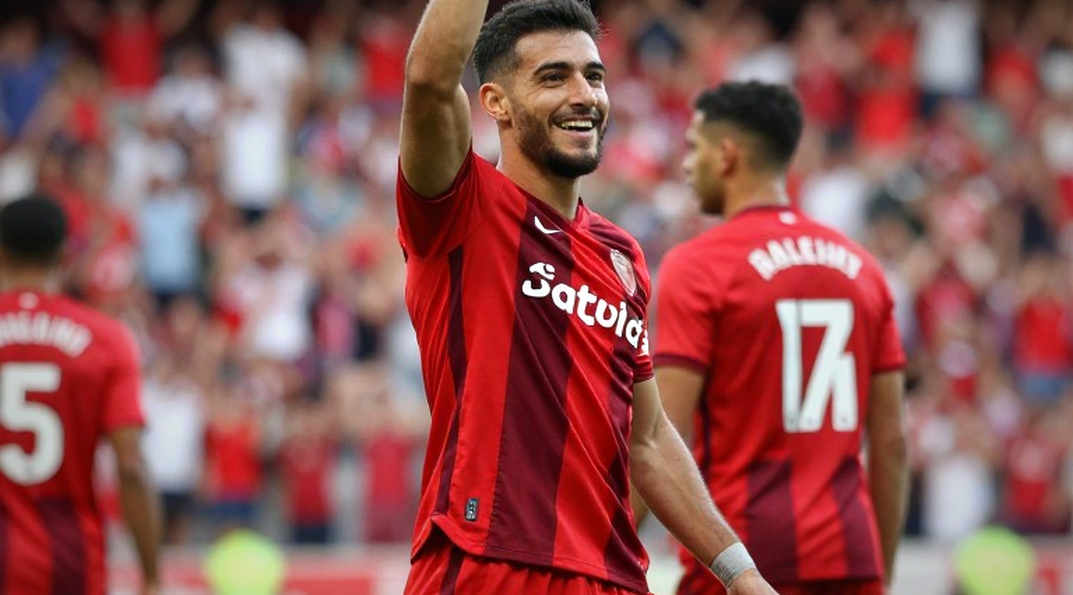
The match ended 0-3. De Bruyne scored twice, Romelu Lukaku once. It was Turkey's third consecutive Nations League defeat, after losses to France and Italy. Three matches, no points, bottom of Group A1. A group containing three football nations that have won or gone deep at major tournaments, and one team still searching for itself.
In Vietnam, most viewers encounter the Nations League through short bulletins: a score, a few names, a couple of lines of summary. But the Nations League is not an expanded friendly competition. It is a tiered system with promotion and relegation, where a team's position determines the quality of opponents it meets for years, its coefficient, its broadcast revenue, and even whether a young player gets to test himself against France or only against a lower-tier side. Relegation from League A is not a scratch on a record. It is a cut into a development path.
Group A1 this season contains Belgium, France, Italy and Turkey. The first three are football nations that have shaped the European map for two decades. The fourth is a team coming off a major-tournament cycle that left a positive aftertaste — and that aftertaste is precisely what makes defeat feel heavier in public perception.
The way the Turkish press framed this match carried a very clear tone. They wrote of a nightmare that continues, of returning empty-handed from Belgium again. That is the language of fatigue, of a public long accustomed to waiting for something better. Framing it that way says a good deal about the emotional temperature around the national team — arguably more than the scoreline itself.
These three defeats need to be placed correctly. This was the third match of a congested international window, with travel between countries and opponents in sequence: France, Italy, Belgium. In the history of the Nations League, very few teams have had to face all three of those powers in a single window. Saying so is not an excuse for zero points. It is a way of asking a better question: is this the collapse of a system, or an ordinary team thrown into an extraordinary schedule?
Back to the 59th minute. If you look only at 0-3, you picture a defence torn apart again and again. What was actually recorded is different: the second goal came from a loose ball the defence had touched but could not clear. This is a second-ball problem, not a shape problem.
Modern football spends enormous time discussing structure with the ball and structure without it. But there is a grey zone that data models typically skip: the instant after a defensive action has ended without truly ending. The ball has been blocked but not controlled. Players have dropped but not yet settled. And in that grey zone, the quality of a team's decision-making decides everything.
The rhythm of a match does not live in the scoreline; it lives in the silence between two passes. That silence is where Turkey lost this match. Not in the first half, not in the closing minutes when everything was settled, but in the exact moment when a defender had to choose between clearing into the stands and finding a teammate in the second line. He chose a third option — a half-measure. At elite level, the third option is usually the most expensive one.
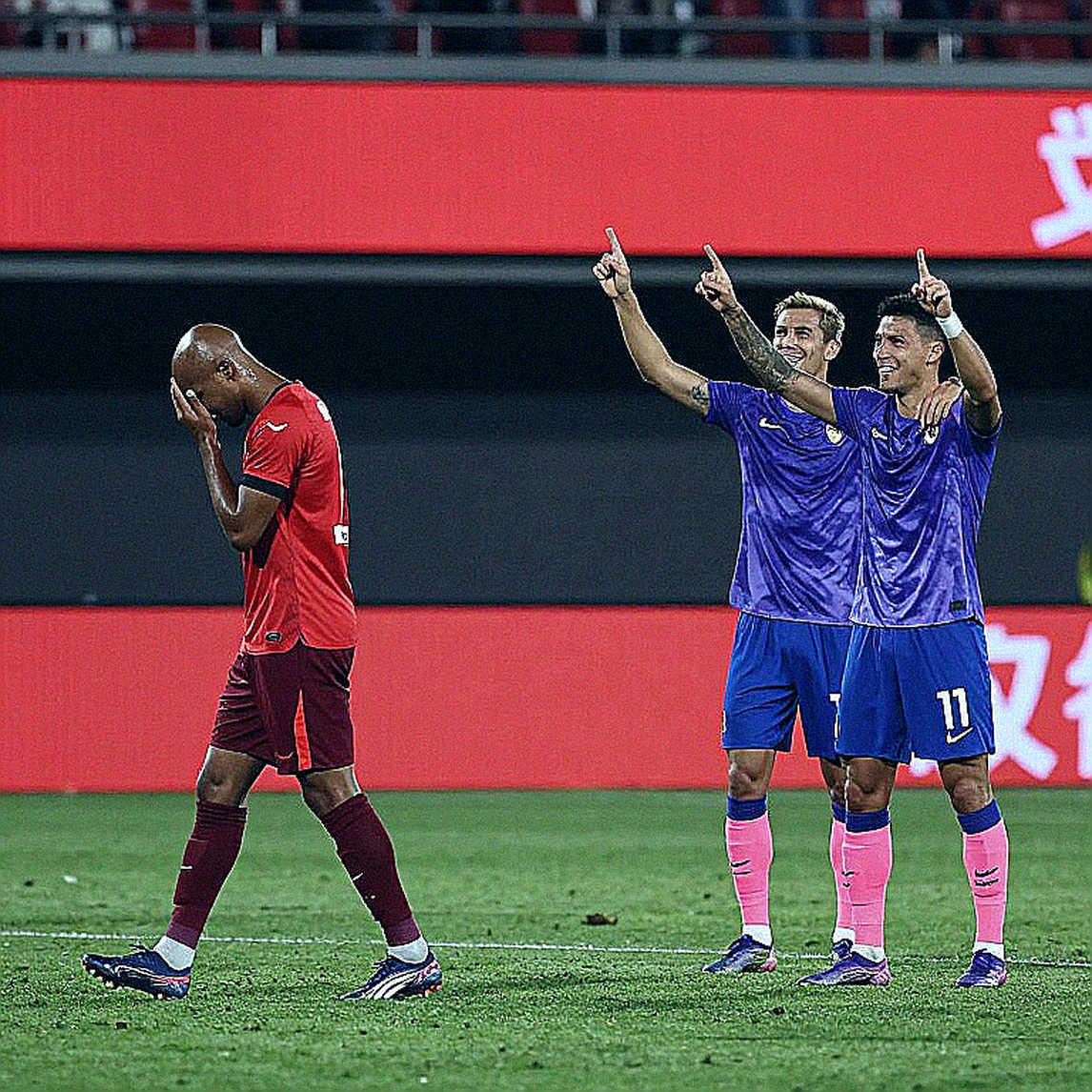
Compare the other two goals. Romelu Lukaku's finish and Kevin De Bruyne's first both carried the mark of individual quality at a different level. Belgium did not need a complex tactical performance to win 0-3. They only needed to get the ball to two players capable of finishing at a standard their opponents do not possess.
That is a structural difference. Belgium own players for whom a single careless moment from the opposition is enough punishment. Turkey own players who need a smoothly functioning system to create chances at all. When those two models meet, the system-dependent side always carries the greater risk, because a system can be broken by a moment, while an elite individual does not need a system to survive.
In the 69th minute, İlhan Fakılı produced a shot that forced goalkeeper Lammens into a two-attempt save. That is the clearest trace that Turkey did generate a genuine chance in the second half. A single data point cannot support the claim that they were equals on the night. But it is enough to reject the image of a team that only endured.
Honesty about the limits of this analysis is necessary. The original report provides no process metrics whatsoever: no expected goals, no shot counts, no possession share, no pressing intensity, no starting lineups. The goal sequence is incomplete too. The opening goal is not described; we only know the score was 1-0 before De Bruyne made it 2-0 in the 59th minute. We are analysing a match in which we can see only one third of the goals.
Based on my experience covering matches, when data is absent people tend to replace it with feeling, and then call that feeling a conclusion. A 0-3 scoreline sounds clear, decisive, easy to post about. But it does not tell you how the match unfolded. It only tells you who scored more.
What can be asserted without data: Turkey lost in the decisive moments, not in their organisational structure. The defence was not stretched to tearing point. The midfield was not passed through like a net. The problem lay in the quality of the final action in each defensive sequence — the clearance, the duel, the decision to step out or hold. Things that never appear on the scoreboard yet decide the scoreboard.
From Belgium's side, there is something worth noting for other national teams. Belgium won through two De Bruyne goals and one from Lukaku. Reliance on that elite group is a strength in matches like this, and a fragility over the long run. When a team can win 3-0 without demonstrating a new tactical idea, the next question is always: what happens on the day the individual moment does not arrive?
Turkey, by contrast, are at a stage where everything depends on organisation. That is the hardest phase of any cycle, and the phase in which the public is least patient.
There is another aspect of the match I consider the most important, and it sits in the final line of the report. İlhan Fakılı came on and made his senior international debut. Before that, he had been named in the provisional squad, then sent down to the Under-21s, then finally handed a chance with the senior side. A path that was not straight. A path that appears designed to test a young player's patience.
For a beat reporter who follows teams, pathways like that are always more interesting than a goal. They reveal how a federation is thinking about the next generation. Sending a young player down to the Under-21s after calling him up can be a psychological step backwards, or a way of testing whether he has the resolve to come back. The only way to know is to watch what happens next.
Professionally, I once covered a season played in entirely empty stadiums. In those months I learned that a young player performs well not because there is applause, but because someone believes he will perform well. İlhan Fakılı's 69th-minute shot, saved in two attempts by Lammens, may never be remembered in any summary of this match. But for a national team searching for new pieces amid a losing run, it may be the only thing worth recording.
This is the point where I want to argue against most of what is being written about this team.
The prevailing reading is that Turkey are in crisis. That reading rests on three defeats and a brutal group. But look closer and the structure of the problem is different. A run of three defeats to France, Italy and Belgium is something most second-tier European national teams could experience. It only becomes a crisis when you expect that team to belong among the elite.
Where does that expectation come from? From a recent major-tournament cycle that left a positive aftertaste. A team that plays well at a tournament is automatically assumed to keep playing well. But between a concentrated tournament and a long, tiered competition there is a gap the public rarely sees. At a tournament, a team can pour all its resources into three or four matches. In the Nations League, those resources must be spread across months, against opponents from three different schools, with no time to prepare specifically for any of them.
That is why the conclusion that Turkey are collapsing rests on very little data and a great deal of feeling. Three matches is a small sample. A small sample with uniform results may reflect nothing more than the fixture list, not the level.
Outside explanations, from people who only read scorelines, always tend to linearise. Three defeats mean a weak team. No goals mean a useless attack. Three conceded mean a crumbling defence. Inside the dressing room the story is far more complex, and the people in there know it better than anyone.
A counterintuitive angle worth considering: what is being tested in Turkey is not player quality, but the ability to remain stable across different opponent states. That is a trainable skill, not a verdict. And it can only be trained if a federation is patient through a cycle.
The tone of the media matters too. When a newspaper chooses the word nightmare for a defeat to an opponent superior in every dimension, it is reflecting readers' mood rather than analysing a match. That mood is real and worth recording. It is not tactical evidence. Confusing the two is the most common mistake in sports writing.
One more detail I want to keep. The second goal arrived in the 59th minute. That means the opening goal came earlier and was not described. For someone in this profession, that gap matters. You cannot retell a story with the first chapter missing. You can only tell the part you know, and be honest about the part you do not.
I keep the beat for those running on the pitch — that is how I belong to the match. And keeping the beat here means calling neither a 0-3 defeat to Belgium a catastrophe, nor a triviality. It was simply a match won by the team with the higher individual quality, through exactly the moments they are paid to produce.
On Belgium's side there is a question this match raised but did not answer. When a team depends on two or three individuals at the highest level, every win of this kind both reinforces belief and conceals a gap. That gap only shows itself in matches where individuals cannot solve things — usually at the least convenient moment.
On Turkey's side, the signals to track sit in three places. First, the results of the remaining group fixtures, because a League A place is a strategic asset, not merely an honour. Second, how the federation handles the generational question, expressed through opportunities given to players like İlhan Fakılı. Third, and perhaps most important, whether the clearance problem in transition recurs — because that is the most concrete detail, and the only one that can be fixed on the training ground.
Three matches, no points, says nothing yet about November. A young player debuting in a defeat says nothing yet about his future. The only clear thing is this: in Brussels that night, a ball sat between two red shirts for half a second, and nobody decided. Football at this level is usually settled by exactly those half-seconds.