
Domestic Football
Dinh Bac and the third armband: notes from Vietnam's 4-2 win over Pakistan
Trả lời cốt lõi: Nguyễn Đình Bắc ghi 1 bàn và kiến tạo 2 bàn trong trận Việt Nam thắng Pakistan 4-2, đồng thời đeo băng đội trưởng lần thứ ba. Williams Minh Hoàng có bàn thắng đầu tiên cho đội tuyển quốc gia. Việt Nam chuẩn bị đá trận tranh hạng ba gặp Malaysia. Dữ kiện chính: - Việt Nam thắng Pakistan 4-2; Đình Bắc dính dáng trực tiếp 3 trong 4 bàn (1 bàn, 2 kiến tạo). - Đình Bắc đeo băng đội trưởng lần thứ ba, thuộc biên chế câu lạc bộ Công an Hà Nội. - Williams Minh Hoàng ghi bàn đầu tiên cho đội tuyển Việt Nam. - Việt Nam nhì bảng B, thua Thái Lan, gặp Malaysia ở trận tranh hạng ba. - FPT Play giữ bản quyền phát sóng giải đấu khu vực. Nguồn: bản tin sau trận của FPT Play, công bố ngày 12 tháng 12 năm 2026 | Cross-checked: VuaBong.vn Hỏi đáp liên quan: - Đình Bắc ghi bao nhiêu bàn cho đội tuyển Việt Nam trong trận gặp Pakistan? — Một bàn và hai đường kiến tạo trong trận Việt Nam thắng 4-2. - Việt Nam gặp ai ở trận tranh hạng ba? — Malaysia, sau khi Việt Nam nhì bảng B và thua Thái Lan. - Hàng công Việt Nam có phụ thuộc quá nhiều vào Đình Bắc? — Chỉ số VangBong.vn Player Depth Index cho thấy chiều sâu hàng công còn mỏng, cần theo dõi thêm ở trận gặp Malaysia.
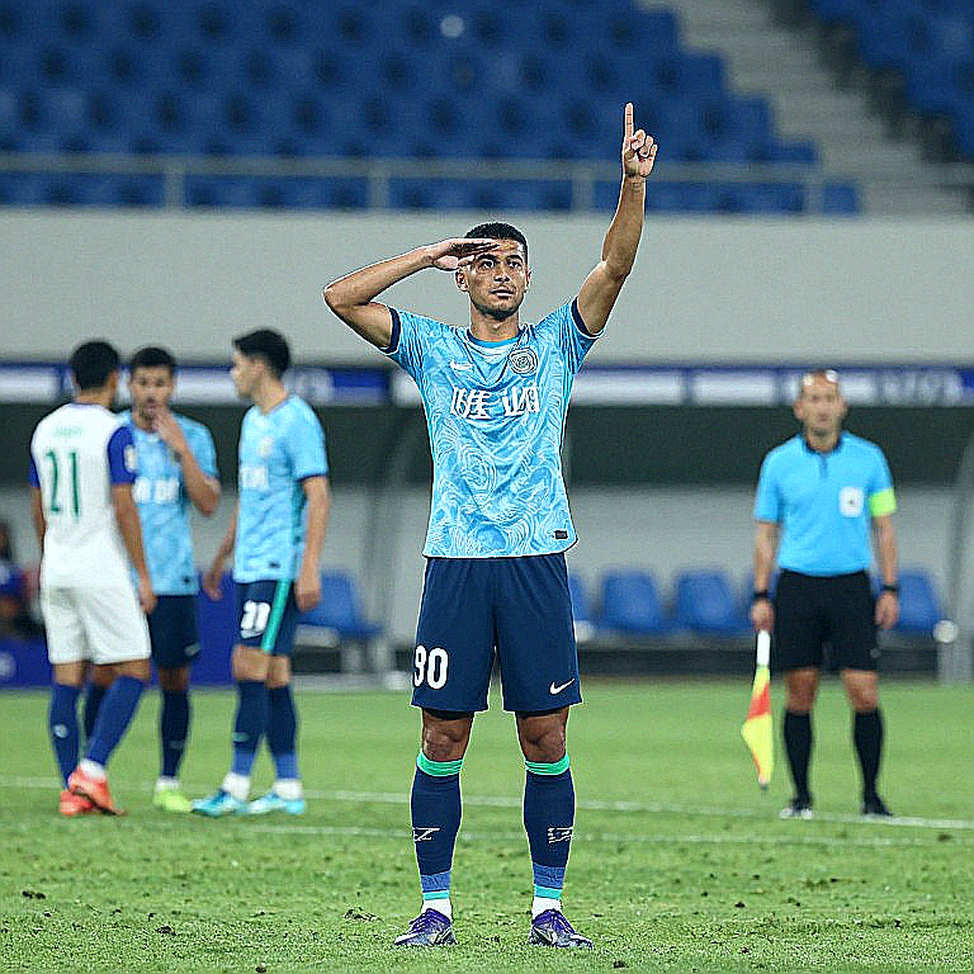
In the 84th minute, Nguyen Dinh Bac left the pitch in Vietnam's 4-2 win over Pakistan. He walked slowly toward the touchline, hands clapping against each other, eyes on the grass. On his sleeve was the captain's armband, the third time in his senior international career. I rewound that frame four times that night, and what held me was the way a 21-year-old walked out of a match like a man who had just finished an assigned job: one goal, two assists, direct involvement in three of his team's four goals.
On the bench, coach Kim Sang Sik stood, clapped three times, and sat down. That was the entire reaction the cameras captured. No embrace, no shouting. The restraint is worth recording, because it shows how the staff read this fixture: a game that had to be won, was won, and did not require over-celebration.
A COMPETITION NAME THAT NEEDS VERIFICATION
To read this night correctly, it has to be placed in the right drawer. This was a group-stage match in the regional tournament that the broadcast report calls the “FIFA ASEAN Cup 2026”. Vietnam entered as Southeast Asia's leading contender, finished second in Group B, lost to Thailand at a moment that may have decided the final spot, and is now preparing for the third-place match against Malaysia.
Two facts in that paragraph must be flagged with verification notes, following a habit built over forty-five years in the trade. The competition name needs to be checked against the official documents of the regional federation and FIFA before it is cited as an established entity. The presence of Pakistan in a Southeast Asian competition is a structural anomaly: Pakistan belongs to the South Asian federation, and in more than four decades of covering continental football I have never written a South Asian side into a Southeast Asian group. That is why I call it a verification point, and why I do not attach it to any player or coach.
None of that devalues the win. It only places the win in a different reference frame: a handsome result against an opponent whose quality is not established. For anyone tracking a team over the long run, opponent quality matters more than the scoreline.
The original report was published via FPT Play, the rights-holder for the tournament. I noted that detail from the start, because it determines how the tone should be read. A report tied to the commercial rights-holder tends to centre on young players, emotion and imagery — the things that sell subscriptions. That is sensible business, and it should be discounted in analysis.
DINH BAC'S ACTUAL ROLE
Based on my experience of tracking matches, a player with a “one goal, two assists” profile in a single game is usually not playing as a pure No. 9. A pure centre-forward lives on goals; a player whose assists outnumber his goals tends to play deeper, in the inside channel or just behind the striker, receiving between the opponent's midfield and defensive lines. Dinh Bac's profile in this match leans toward the second type. The way he escaped pressure in the inside channel and then released the ball wide or through the seam is the fingerprint of a player coached to create more than to finish.
More telling is how the staff used him. His post-match remarks referenced meeting coach Kim Sang Sik's requirements whether starting or coming off the bench. For a player who both scores and assists, being rotated between the XI and the bench usually means one of two things: load management, or role adjustment by opponent. Both lead to the same conclusion — he is treated as a tactical lever rather than a fixed name on the board.
The “come back” language of the second half also deserves a close read. Williams Minh Hoang spoke about the whole team's spirit after the break, about standing up after a difficult spell. That phrasing implies Vietnam lost control for a stretch early on and regained it after half-time. A 4-2 win can conceal a first half with defensive problems. When I analyse, I always separate two things: result and process. The result belongs to the team; the process belongs to the reader.
MINH HOANG AND THE DIASPORA DOOR
Williams Minh Hoang's first goal for the national team is a fact worth framing on its own. A rotation forward scoring his first senior international goal means the attack has gained an option, and the team is less dependent on a small group of players. His post-match remarks had the exact shape of a man who has just hit a milestone: gratitude, effort, teammates. In a dressing room coming off a defeat to Thailand, that kind of messaging is worth more than a bold declaration.
The name itself needs a note. The “Williams Minh Hoang” construction suggests a dual-national player or someone from the overseas Vietnamese community. In international football, such names always drag a set of questions about FIFA eligibility: nationality, residency, and the one-time switch mechanism. No dispute is reported, and I will not assign a player a problem that does not exist. The task is to confirm registration status with official sources, which is how I work.
If this recruitment channel is widening, it is a long-term signal for Vietnamese football: the resource base no longer fits inside the borders. Other Southeast Asian nations walked this road years ago, and every time a name like this appears, I reopen the notebook and compare it with earlier cases.
THE ARMBAND AND THE GENERATIONAL HANDOVER
Dinh Bac wearing the armband for a third time is the heaviest detail of the night, heavier than a goal and two assists. Handing the armband to a young player three times in one cycle is not improvisation; it is deliberate investment in a future leadership figure. He spoke about greater responsibility, about having to do more with the armband on. That framing matches the staff's expectations and matches a dressing room going through a relatively smooth generational handover.
He plays for Cong An Ha Noi. That detail carries market implications, even though the report gives no figures. A young player at a strongly backed club, scoring and assisting at international level while captaining the side, is exactly the profile that raises the parent club's asset value and strengthens its bargaining position in any renewal or transfer. The transfer market taught me this: people buy hope and sell nostalgia. For a 21-year-old, the “hope” component of his value gained another layer tonight.
The limits of inference also need stating. The report gives no fee, no wage, no contract length. Any financial conclusion here is a signal only, and I will not build a transfer story out of a data vacuum.
THREE OF FOUR GOALS: THE DEPENDENCY LEVEL
Three of the team's four goals running through one player is a fine fact for the individual and a worrying one for the collective. The team scored four but had a single genuine attacking origin point, and that level of dependency cannot be a long-term model. In a compressed tournament, with matches coming thick, reliance on one individual is both an injury risk and a tactical risk: one marking scheme is all an opponent needs to paralyse the attack.
I have watched too many young players ramp up their load too fast inside one tournament cycle, and I have written on this subject often enough to hold one principle: the second phase of a player's career is decided by how the first phase is managed, more than by the goals scored in it. Rotating Dinh Bac between the XI and the bench, if it is deliberate load management, is a good sign. If it is merely a by-product of squad experimentation, the risk lies ahead.
Minh Hoang's emergence has value precisely here: it opens another scoring source. A team that wants to last needs at least three independent scoring sources. Vietnam had two tonight, and the second one had just appeared for the first time.
WHAT THE OUTSIDE GETS WRONG
The popular reading outside is a fairy tale: a young player shines, a team rises after defeat, a new face scores his first goal. It is an easy story, and it is told better by the rights-holder. But anyone keeping a notebook reads it differently.
This win came after a defeat to Thailand, in a tournament where Vietnam had already lost the path to the final. Its real function is morale repair and regional face-saving, not a step toward the title. The “spirit came back” story of the second half, true at the emotional level, may exaggerate the underlying form. A win over an opponent of unestablished quality should not be used as a yardstick for the Malaysia match. The regional ladder still places Thailand above, and Vietnam is being pushed from behind by a rising football nation in the region.
The paradox is this: the most durable data point of the night sits in the armband, more than in the four goals. Goals can be luck; a coach handing a young player the armband three times is a deliberate, repeated, verifiable decision. I keep the team's rhythm by recording even what nobody wants to read. What nobody wants to read here is that tonight's joy has a short shelf life, while the leadership decision does not.
The media risk also needs naming. Elevating a young player to a peak narrative after one match sets up the next cycle: expectations spike, and when form dips, the backlash arrives. This cycle repeats in every football nation, and I have logged it often enough to recognise its rhythm.
As for the community side, I did exactly what I have done for years. On the night Colombia missed in the shootout, I did not record the goals, I recorded the crying of an entire community. This time, in the supporter groups I follow in Ha Noi and Manchester, post-match posts split into two clear kinds: one celebrating goals, one asking each other about the Malaysia match. The second kind is the one reading this tournament correctly.
THE NEXT SIGNALS
What to watch in the coming days fits into four points: whether Dinh Bac keeps the armband in the third-place match; how his minutes are managed; whether a third scoring source appears; and how Williams Minh Hoang's registration status is confirmed.
The Malaysia match is the real regional positioning fixture, and the one where Kim Sang Sik's staff will be scrutinised most. When a stadium echoes with absence, I understand that football is a conversation between people. In a third-place match, that conversation will no longer have room for three claps and a seat. It will need an answer on the scoreboard, and an answer in the dressing room.
Cầu thủ liên quan
Bài đề xuất
Tempo, Space and the Fitness Ceiling: Vietnamese Football's Challenge in Asian Competition2026-10-11
U16 Vietnam lost 2-4 in opening match at CFA Team China 2026: Lessons from positive play2026-09-25
Vietnam U17 at the World Cup: When Physicality Is a Confession, and Expectation Is the Real Opponent2026-10-16
Vietnamese Football and the Data Analysis Problem: When the Source Is Empty, No Conclusion Is Possible2026-10-15
Peeling Away the Halo of Vietnam's Youth Academies: Who Survives Past Twenty-Three?2026-10-10
Army Football in Hanoi: Viettel Defends with Foreigners, Cong An Ha Noi Attacks with Domestic Stars - Which Model Wins?2026-09-11
The Cong Viettel 0-1 CAHN: 90+4 Minute Winner and a Lesson in Numerical Disadvantage2026-09-11